🔥 INTRODUCTION
Released in 2006 as a PlayStation 3 launch title, Resistance: Fall of Man arrived during a transitional moment for shooters and for the industry as a whole. The hardware was new, expectations were unstable, and design philosophies were still being renegotiated. Resistance didn't try to define the future of the genre through spectacle or excess. Instead, it planted itself firmly in a specific idea and committed to it fully.
That idea was momentum.
Momentum not as speed, but as convergence. A world already in collapse, a war already being lost, and a protagonist already marked before the player ever touches the controller.
My relationship with Resistance has never been anchored in nostalgia. I first played it in fragments, at a time when owning the hardware wasn't guaranteed. I've revisited it repeatedly across the years, including more recently through emulation and now again on native PlayStation 3 hardware. Each return has stripped away assumptions rather than reinforcing memory. What stands out is not how the game reminds me of the past, but how consistently it holds together under scrutiny.
Even after returning to Resistance repeatedly over the past several months, revisiting the same missions, sometimes multiple times, the game has held together in a way few shooters do. Familiarity didn't dull the experience. It clarified it.
Resistance is often dismissed as a straightforward, linear shooter. That description misses the point. Linearity here is not limitation; it is intent. The game is not asking you to explore possibility space or shape outcomes. It is asking you to endure a campaign. Each mission feels episodic, but never disposable. You move through towns, countryside, industrial spaces, and alien infrastructure in a way that communicates distance and escalation. By the time the campaign reaches its final movements, the shift in environment feels earned, not cosmetic.
This assessment is not about what Resistance could become, or whether it deserves revival. It does not rely on external context, console wars, or franchise potential. It treats the game as a closed system and evaluates it on its own terms.
What follows is not a retrospective built on memory. It is an examination shaped by sustained engagement and an effort to fully internalize the game on its own terms
Resistance doesn't ask you to feel powerful. It asks you to keep moving when certainty, safety, and context are already gone. That clarity, rare then, and rarer now, is why it still holds.
🌄 VISUALS & WORLD DESIGN
Visually, Resistance: Fall of Man is not trying to impress you. It is trying to convince you.
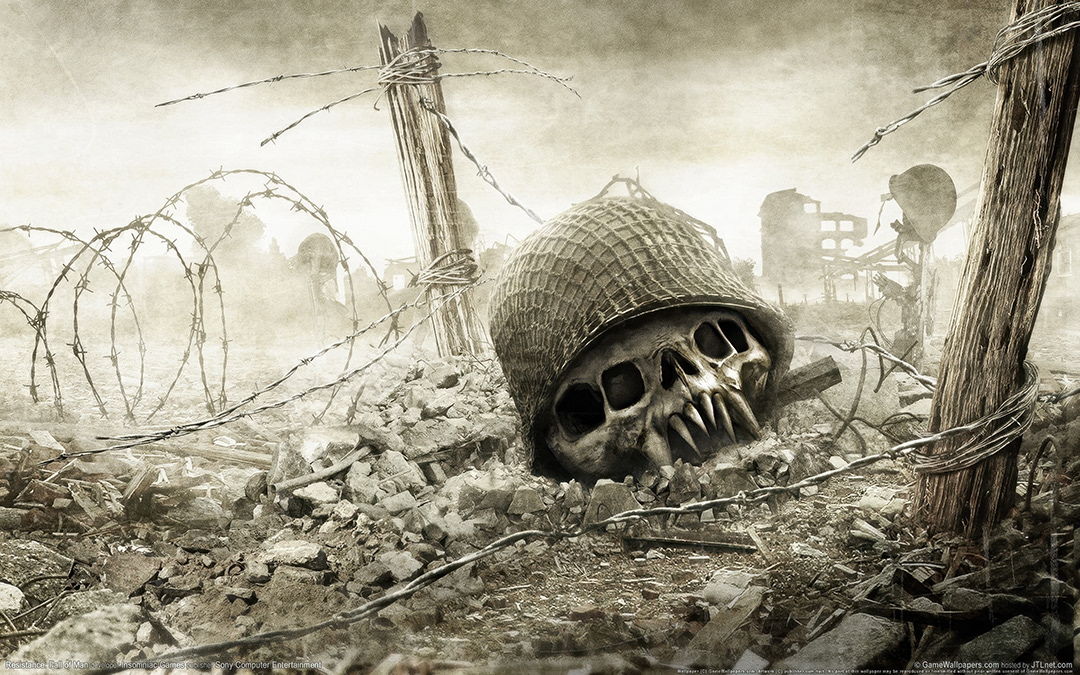
The game's color palette is deliberately restrained: browns, greys, desaturated greens, and muddy earth tones dominate nearly every environment. This choice is often dismissed as dated or monotonous, but that criticism misunderstands the goal. Resistance is not presenting a world worth preserving visually. It is presenting a world already spent. This is an alternate-history Europe still recovering from World War II, and the game leans into that exhaustion rather than aestheticizing it.
The result is a world that feels used, not staged.
What elevates Resistance above many shooters of its era is not texture detail or lighting complexity, but physical response. The environment does not exist as a static backdrop. It reacts, breaks, collapses, and degrades under pressure, reinforcing the idea that you are fighting through spaces, not simply moving across them.
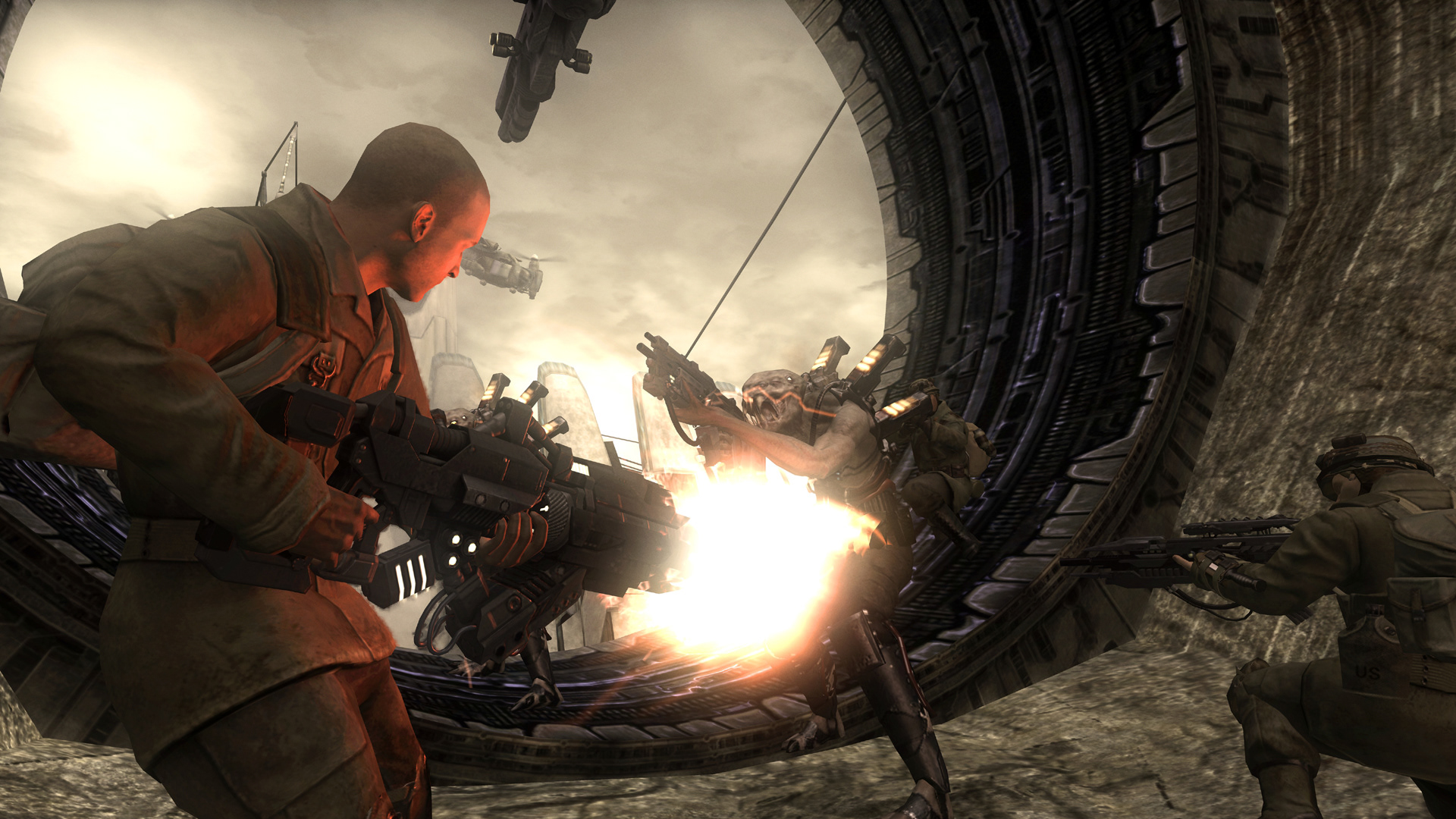
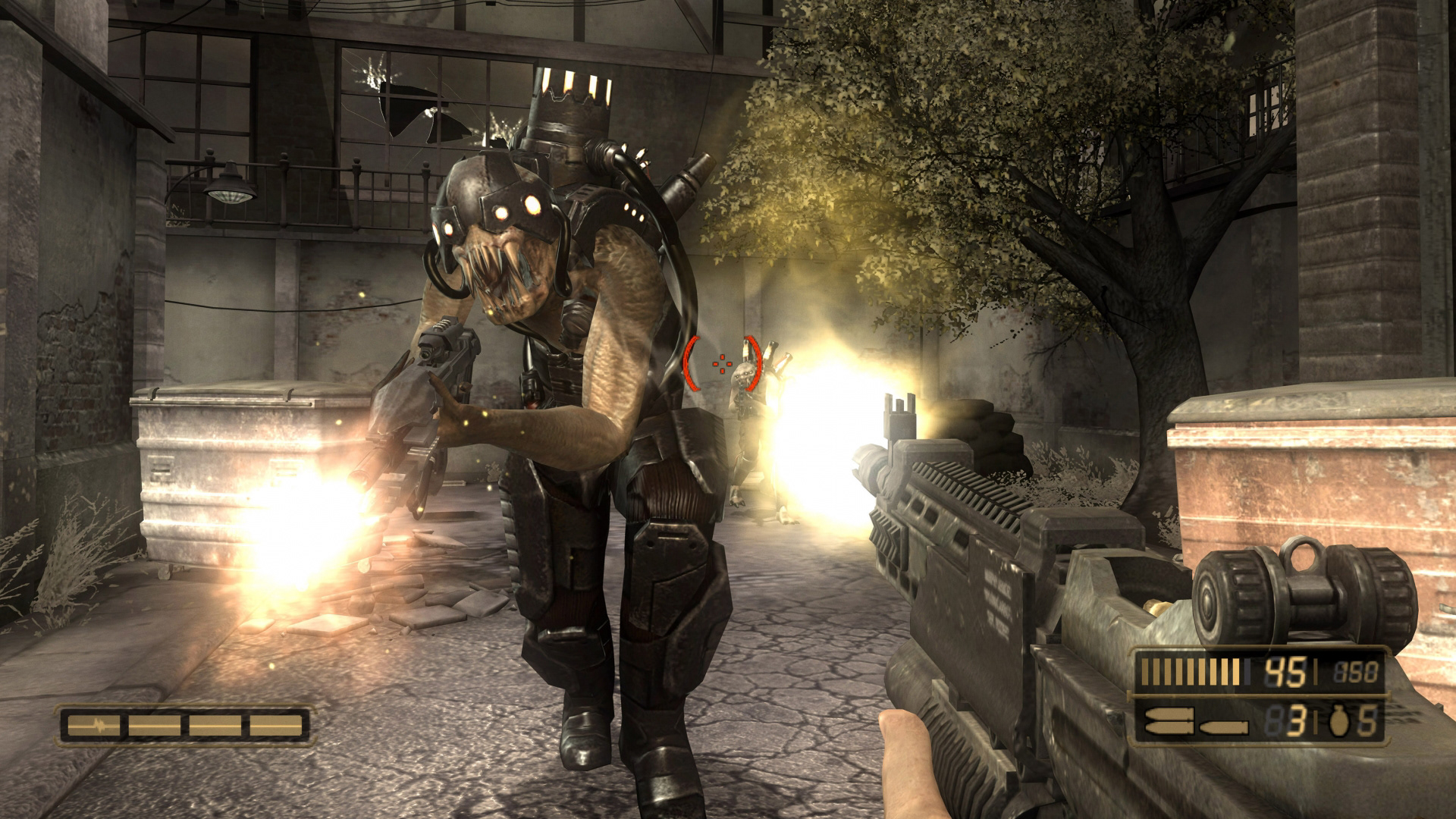
Glass is the clearest example. Windows are not ornamental. They shatter dynamically under fire, and several encounters are explicitly designed around that interaction. Enemies appear behind glass partitions, forcing you to decide whether to engage through it, break it preemptively, or use the moment of collapse to push aggressively into their space. The act of breaking glass is not cosmetic. It alters sightlines, sound, and combat flow in a way that feels intentional.
That philosophy extends to the rest of the environment.
Wooden furniture splinters under force. Tables collapse when struck or used as cover too aggressively. Concrete barriers chip and break, sometimes enough to expose enemies hiding behind them. Explosions scatter debris rather than simply playing an effect.
These are small interactions individually, but collectively they create a consistent message: nothing here is safe, solid, or permanent.
Resistance does not feature a full physics sandbox, but it doesn't need one. What it offers instead is selective physicality, just enough reactivity to ground combat and sell consequence. When a grenade detonates, the environment acknowledges it. When a body ragdolls into nearby objects, the space reacts accordingly. Violence leaves marks.
Level design reinforces this physical grounding through clear spatial identity. Despite a cohesive visual language, individual locations do not blur together. European towns feel open but vulnerable. Industrial facilities feel claustrophobic and procedural. Countryside sections emphasize exposure and lack of cover. As the campaign progresses, the environments gradually transition toward overtly alien spaces dominated by Chimera infrastructure.
The game does not jump abruptly from realism to science fiction. It slides there. Early levels are grounded in familiar, war-torn architecture. By the end, you are navigating towering alien structures, cooling systems, and industrial networks designed for an entirely different biology. When the final snow-covered Chimera environments appear, they do not feel like a palette swap. They feel like the logical endpoint of planetary conversion.
Environmental storytelling reinforces this escalation. The Chimera are not merely occupying spaces. They are rebuilding them. Pipes, towers, conduits, and spires suggest a systemic takeover rather than random destruction. The world is not being ruined. It is being repurposed.
Cinematics support this approach without overpowering it. Cutscenes are concise, focused, and visually consistent with in-game presentation. They communicate scale and loss without indulging in spectacle for its own sake. Even now, they hold up because they rely on composition and timing rather than excessive detail. The static briefing-style narration frames events as documentation, reinforcing the idea that this war is being recorded, not mythologized.
There are limitations, and they are visible. The game runs at 30 frames per second. Aliasing and resolution reflect its era, and geometry lacks modern refinement. But these technical constraints rarely undermine immersion. With responsive controls and mostly stable performance, the game remains readable and mechanically satisfying, especially when played on original hardware.
What ultimately makes Resistance's visual design endure is cohesion. Everything, palette, destruction, level progression, and cinematic framing, serves the same thematic purpose. The world feels exhausted, unstable, and in the process of being overtaken by something methodical and indifferent.
Resistance does not try to hide its age.
It lets its world speak through how it breaks.
🔊 SOUND DESIGN
The sounds in Resistance are not trying to impress you. They exist to keep you oriented, pressured, and alert.
While the game carries elements of genuine horror, it does not lean into prolonged silence or minimalism. Resistance maintains a constant auditory presence that reflects its identity as a war game first and foremost. The soundscape stays active, grounded in the rhythms of conflict rather than in atmosphere alone.
There is almost always something happening aurally, but very little of it exists to demand attention. Audio in Resistance functions as reinforcement rather than spectacle, maintaining tension through continuity rather than contrast.
Weapon Audio as Identity
Weapon sound is the most immediately legible layer of the audio design, and it is handled with care. Human firearms sound grounded and familiar. The assault rifle, shotgun, sniper rifle, and rocket launcher all carry a weight that feels appropriate for mid-century military hardware. They do not sound exaggerated or cartoonish. They sound functional, reliable, and loud in a way that reinforces their role as tools of attrition.
Chimera weapons, by contrast, sound engineered rather than industrial. The Bullseye stands out immediately: sharp, piercing, and mechanical, with a discharge that feels less like an explosion and more like a precise incision. Its audio communicates intent: this is not brute force, it is accuracy weaponized. The sound alone tells you this gun operates under a different logic than anything human-made.
Other alien weapons follow the same philosophy. The Auger's sustained, penetrating fire has a slower, heavier presence, emphasizing inevitability rather than speed. The shield activation produces a distinct audio cue that reinforces its tactical role without requiring visual confirmation. Even without looking, you know when space is being denied.
Nothing sounds wasted. Every weapon has a clear auditory silhouette, and that clarity becomes increasingly important as encounters scale up and the battlefield grows chaotic.
Environmental Audio & Physical Feedback
Environmental sound design reinforces the game's emphasis on physicality. When glass shatters, it sounds brittle and immediate. When debris collapses, there is weight behind it. Explosions do not just bloom and fade. They leave behind a moment of sonic disruption that reinforces their impact.
Small details matter here. Pool balls clatter convincingly when struck. Wooden furniture cracks and collapses with appropriate texture. Metal surfaces ring or dull depending on force. These sounds do not draw attention to themselves individually, but they accumulate into a space that feels tangible rather than simulated.
Crucially, the mix remains clean. Even during heavy firefights, important audio cues are rarely lost. You can distinguish enemy fire from friendly weapons. Explosions do not drown out positional awareness. The soundscape supports decision-making rather than overwhelming it.
Enemy Audio as Threat Language
Chimera enemies are not expressive in a human sense, and their audio reflects that. Their vocalizations feel functional: signals rather than emotions. You are not hearing rage, fear, or personality. You are hearing coordination, movement, and pressure.
Different enemy types are distinguishable not just visually, but aurally. Swarming enemies announce themselves through frantic, aggressive noise. Larger units carry heavier, more deliberate sound profiles. Mechanical enemies emit audio that reinforces mass and momentum. This allows the player to read threats even when visual information is incomplete.
Importantly, enemy audio contributes to tension without theatrics. There are no dramatic screams meant to scare you. The intimidation comes from density and persistence: the sound of too many things moving at once.
Music as Militaristic Pressure
The score in Resistance is functional, restrained, and deliberately unmemorable, and that is not a flaw.
Music here serves the war, not the player's emotions. It evokes a militaristic tone consistent with the 1950s setting without leaning into overt heroism. There are no soaring melodies meant to inspire triumph, and no quiet, melancholic themes meant to slow the pace. Instead, the score reinforces forward movement, pressure, and escalation.
It feels like marching music for a campaign that never pauses long enough to reflect.
This approach keeps the focus on action and momentum. The absence of a dominant musical identity allows environmental sound and weapon audio to remain foregrounded. You are reacting to the battlefield, not to the soundtrack.
Voice Acting & Narrative Framing
Voice acting is understated and purposeful. Accents clearly differentiate British and American forces, grounding the setting without exaggeration. Performances are restrained, professional, and appropriate for a military context where emotion is contained rather than displayed.
Rachel Parker's narration is particularly important. Her delivery is measured, analytical, and occasionally monotone, not because of weakness, but because of framing. She is not living the story in real time. She is documenting it after the fact. That distance reinforces the idea that the events you are playing through have already been processed, categorized, and recorded.
Nathan Hale's limited dialogue is equally intentional. He speaks sparingly, never filling silence unnecessarily. His presence is defined more by action and reaction than by speech, allowing the soundscape around him to remain dominant.
Cohesion Over Spectacle
There is nothing in Resistance's sound design that exists to show off. No moment screams for attention. No audio cue demands admiration. Instead, everything works together to maintain pressure, clarity, and immersion.
If the sound design failed, it would be obvious. Audio problems in shooters are immediately disruptive. Here, nothing pulls you out. Weapons feel right. Environments sound real. Enemies are readable. Music supports without distracting.
That consistency is the achievement. Resistance's sound design does not try to be iconic. It tries to be reliable.
⚔️ GAMEPLAY
Gameplay is where Resistance reveals its real identity.
This is not a corridor shooter pretending to be deeper than it is. It is a weapon-driven combat system built around adaptation, escalation, and pressure. Linearity is not the absence of choice here. It is the framework that allows the game to test how you solve problems, not where you go.
The core design philosophy is simple and consistent:
The game will escalate threats, and it will always give you the tools to survive, if you are willing to use them correctly.
The Weapon Sandbox
Resistance does not operate on modern loadout logic. You are not encouraged to specialize, min-max, or settle into a comfort weapon. Instead, the game is built around a weapon wheel that keeps every tool immediately accessible. This matters more than it sounds.
The wheel is not just convenience. It is a design statement. Combat encounters are constructed with the assumption that you will switch weapons mid-fight, reassess threats dynamically, and respond to enemy composition, not habit.
If you die repeatedly, the game is usually not asking you to play better in a mechanical sense. It is asking you to play smarter. The solution is rarely precision alone. It is selection.
Certain weapons dominate specific problems:
The Bullseye excels at tagging and controlling priority targets. The Auger denies cover and punishes defensive play. Shotguns dominate tight spaces and swarm pressure. Snipers thin out distant threats before they escalate. Explosives clear rooms when momentum stalls.
The game does not lock these answers behind progression walls. It hands them to you, then expects you to understand why they exist.
Difficulty as Tool Check, Not Punishment
Resistance can be demanding even on lower difficulties, but that difficulty is not rooted in artificial scarcity or attrition. Ammo is generally available. Checkpoints are fair. Survival is governed less by deprivation than by decision-making.
Health is managed through discrete recovery rather than full regeneration. Hale carries a limited number of health segments, restored via pickups rather than automatic healing. After infection, partial regeneration is possible, but only within the bounds of the available segment. Damage that exceeds a segment is permanent until replenished.
This structure reinforces the game's philosophy. Resistance does not punish you for taking damage once. It punishes you for refusing to adapt. Brute-forcing encounters with the wrong weapon, ignoring enemy priority, or refusing to reposition is what gets you killed. When players describe certain checkpoints as "cheap," they are usually describing moments where the game stops tolerating passive play.
These spikes are not arbitrary. They function as stress tests, asking whether the player has internalized the game's systems. Once that adjustment is made, the same encounters resolve quickly and decisively.
Enemy Variety & Combat Layering
Enemy variety in Resistance is not about spectacle. It is about role overlap.
Early enemies teach fundamentals: hybrids and menials establish baseline threat. As the game progresses, enemies are layered together in combinations that force constant awareness. Swarm units punish tunnel vision. Heavy units demand repositioning. Long-range enemies pressure cover usage. Mechanical enemies reshape the battlefield entirely.
What matters is not how many enemy types exist, but how the game combines them. Late-game encounters rarely introduce entirely new ideas. Instead, they remix established threats in more aggressive configurations.
This creates escalation without confusion. You are never unsure what an enemy does. You are challenged by how many problems you must solve at once.
Environmental Combat & Spatial Control
Resistance's combat spaces are not arenas in the modern sense, but they are not hallways either. They are functional combat zones designed around movement, cover degradation, and flanking.
You are encouraged to push aggressively when momentum favors you, pull back when swarms threaten overwhelm, flank entrenched enemies instead of trading fire, and exploit destructible elements to break stalemates.
The game does not explicitly teach these behaviors. It creates situations where they become necessary.
Crucially, you are almost always in the lead. Resistance avoids escort pacing, follow-the-NPC segments, and forced positioning. You choose when to advance, when to hold, and when to reposition. That autonomy reinforces the fantasy of being a forward-moving force rather than a participant waiting for instructions.
Vehicles as Pacing Tools
Vehicle sections are used sparingly and intelligently. Tanks, jeeps, and the Chimera Stalker are not novelties. They are pacing resets. They change how you read space, how you approach threat density, and how you engage objectives.
The tank delivers power without trivializing danger. The jeep sections emphasize chaos and improvisation. The Stalker introduces mechanical combat that mirrors infantry encounters at a different scale.
Each vehicle section escalates slightly, ensuring they never feel like interruptions. They expand the vocabulary of the game without diluting its focus.
Replayability Through Systems, Not Structure
Resistance's replayability does not come from branching paths or alternate endings. It comes from systemic freedom within fixed structure.
Replaying encounters with different weapon priorities changes the rhythm of combat. Unlockable weapons on subsequent runs add new tactical options without invalidating existing ones. Familiar spaces become testing grounds for experimentation rather than repetition.
This is why replaying large portions of the campaign does not feel like a chore. The structure stays the same, but the experience shifts based on how you engage with it.
Why the "Corridor Shooter" Criticism Fails
Calling Resistance "just a corridor shooter" misunderstands what the game is trying to do.
Yes, it is linear. But linearity here serves clarity, escalation, and pressure. The game is not about exploration or player expression through narrative choice. It is about endurance, adaptation, and forward momentum.
The question Resistance asks is not "Where do you want to go?"
It is "How will you survive what's coming next?"
And it asks that question relentlessly.
📖 STORY & CHARACTERS
Resistance: Fall of Man tells its story through forward motion and omission, not exposition. It does not pause to contextualize the apocalypse in detail, nor does it attempt to mythologize its characters in real time. Instead, it places you inside a war that has already gone catastrophically wrong and asks you to survive long enough to understand why.
Set in the early 1950s, the game frames the Chimera invasion as a continuation of global collapse rather than a sudden disruption. World War II has ended only a few years prior. Europe is depleted. Infrastructure is fragile. Militaries are reorganizing, not prepared. The Chimera do not invade a strong world. They exploit a recovering one.
This framing matters. Resistance is not about humanity at its peak confronting the unknown. It is about a weakened civilization being methodically dismantled by something that does not hate it, fear it, or even acknowledge it emotionally.
The Chimera do not conquer through chaos.
They conquer through process.
Nathan Hale: The Wounded Instrument
Nathan Hale is often described as "blank" or "underwritten." That reading misses the point.
Hale is not meant to be expressive. He is meant to be contained.
By the time the game begins, Hale is already a survivor of multiple near-death events. Orphaned early in life, hardened through labor, decorated for his skill, and quietly selected for high-risk assignments, he enters the narrative as someone who has already accepted expendability as a condition of existence. The game does not need to explain this explicitly, because Hale's behavior communicates it consistently.
He speaks rarely. He deflects concern. He avoids medical scrutiny. He moves forward without reflection.
This is not emotional absence. It is emotional compression.
Crucially, Hale is not just a soldier caught in an invasion. He is a man already altered before arriving in Europe. His participation in a covert American experiment involving Chimeran biology, something the game only implies rather than explains, reframes his entire role. Hale is not reacting to infection; he is carrying it.
That detail recontextualizes his resistance to the Chimera virus throughout the campaign. He is bitten, exposed, incapacitated, and repeatedly wakes up. Where others are overtaken, Hale persists. Not because he is immune in a heroic sense, but because his body is already compromised, already altered, already crossing boundaries.
Psychologically, Hale fits the archetype of the wounded instrument: a tool shaped by trauma, a survivor who does not expect survival, a man whose purpose is action, not resolution.
He does not fight because he believes he will win.
He fights because stopping would mean confronting what he already is.
Rachel Parker: The Chronicler of Collapse
Rachel Parker functions as the narrative spine of Resistance. She is not a traditional emotional anchor or companion character. She is an observer, strategist, and historian, documenting the war as it unfolds.
Her narration is measured, analytical, and intentionally restrained. At times it borders on monotone, not because of weak delivery, but because of framing. Parker is not telling this story as it happens. She is recording it afterward. The distance in her voice reinforces the sense that what you are playing through has already been processed, categorized, and archived.
This framing transforms the campaign into something closer to a military record than a heroic journey. The implication is unsettling: the outcome is known. What remains uncertain is the cost.
Parker also serves as a narrative contrast to Hale. Where Hale suppresses information and avoids scrutiny, Parker seeks understanding. She asks questions. She tracks patterns. She recognizes that Hale is not responding to the Chimera the way others do, and that recognition quietly escalates toward suspicion.
She is not cold.
She is institutional.
The British Allies: Humanity in Real Time
Resistance gives you very few characters to attach to, and that scarcity is deliberate. Among them, Captain Cartwright stands apart as the most important human presence in the campaign.
Cartwright is not immediately warm. He is skeptical, disciplined, and slow to grant trust. In a world already collapsing, respect is not freely given. It is earned. Hale earns it not through speeches or sentiment, but through action. Competence under pressure. Reliability in combat. Forward motion without complaint.
Cartwright also recognizes that something about Hale is wrong, and chooses not to care. He understands that Hale is infected. He understands the risk. And he dismisses it as "small stuff" in the face of extinction. That decision defines him. Cartwright is not reckless; he is pragmatic. Humanity is already compromised. What matters now is whether someone can still fight.
Through multiple missions, Cartwright functions as Hale's closest thing to a comrade. They move together, survive together, and implicitly trust one another in ways Hale does not allow elsewhere. Cartwright does not ask Hale to explain himself. Hale does not offer explanations. Mutual recognition replaces dialogue.
That bond makes Cartwright's death land with quiet force.
When he stays behind to cover the entrance, there is no speech, no ceremony. Just necessity. His final words are practical, not emotional. Hale's reaction is equally restrained, but not empty. For a brief moment, his expression betrays loss. Not surprise. Not denial. Loss.
And then he moves on. The war does not pause. The mission does not change. The absence remains unacknowledged because it cannot be afforded.
Cartwright's role is essential because he proves something the game never states outright: Hale is capable of connection. He simply cannot linger in it. Respect and even admiration are possible, but only briefly, and only under fire.
That makes Cartwright's sacrifice more than a narrative beat.
It is the last moment in which Hale is allowed to be human with someone else before the story closes in around him completely.
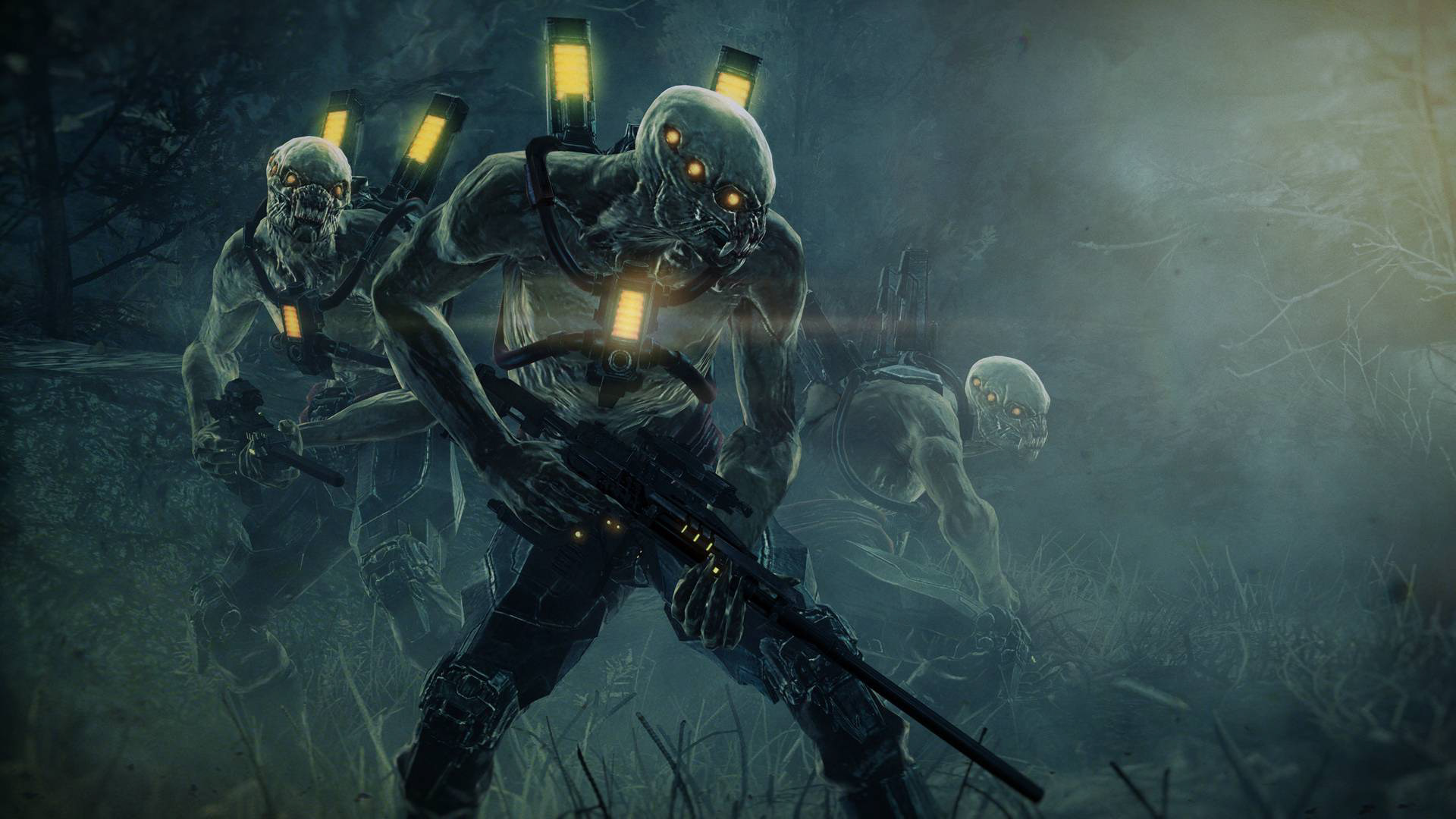
The Chimera: Procedural Horror
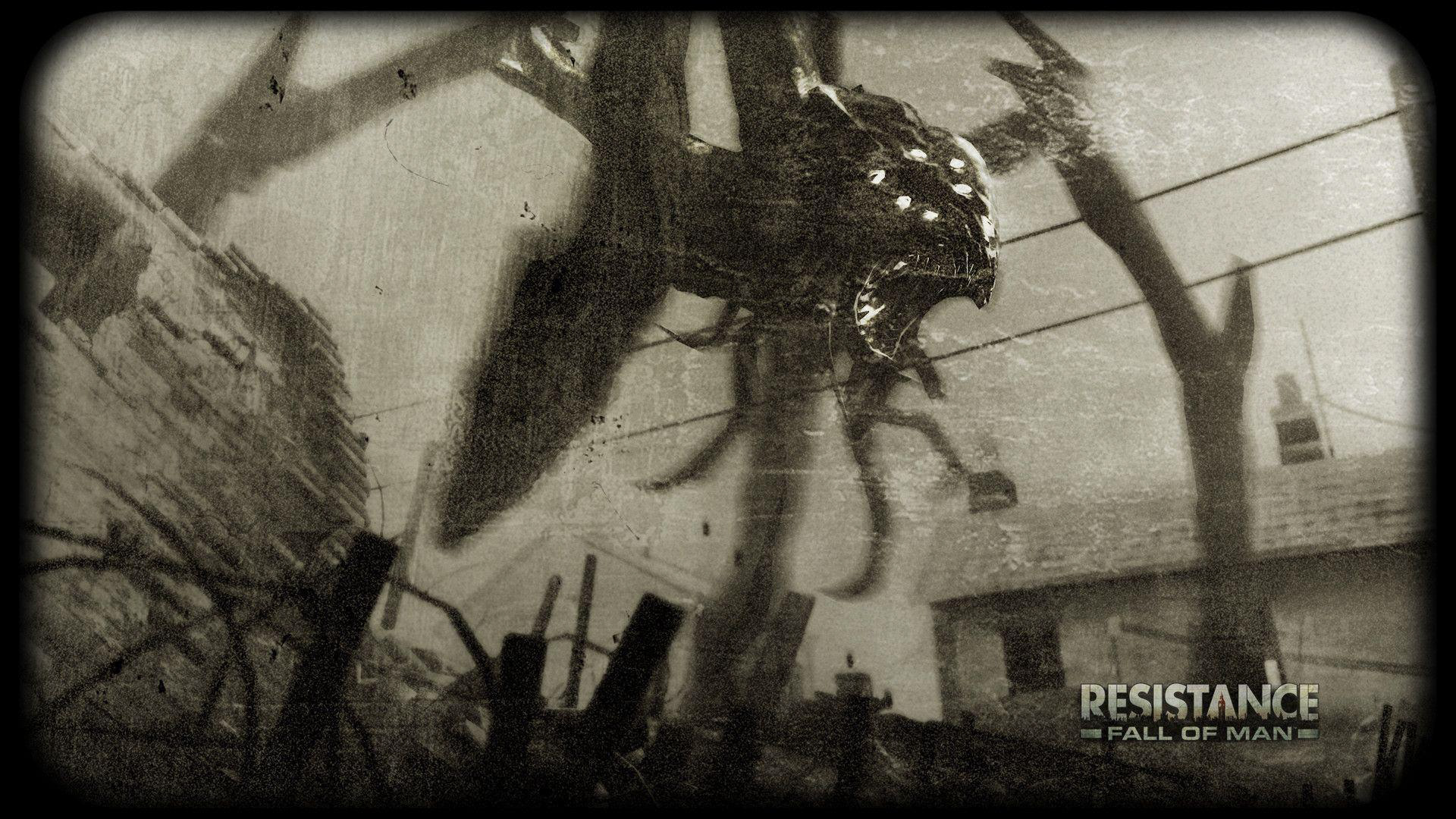
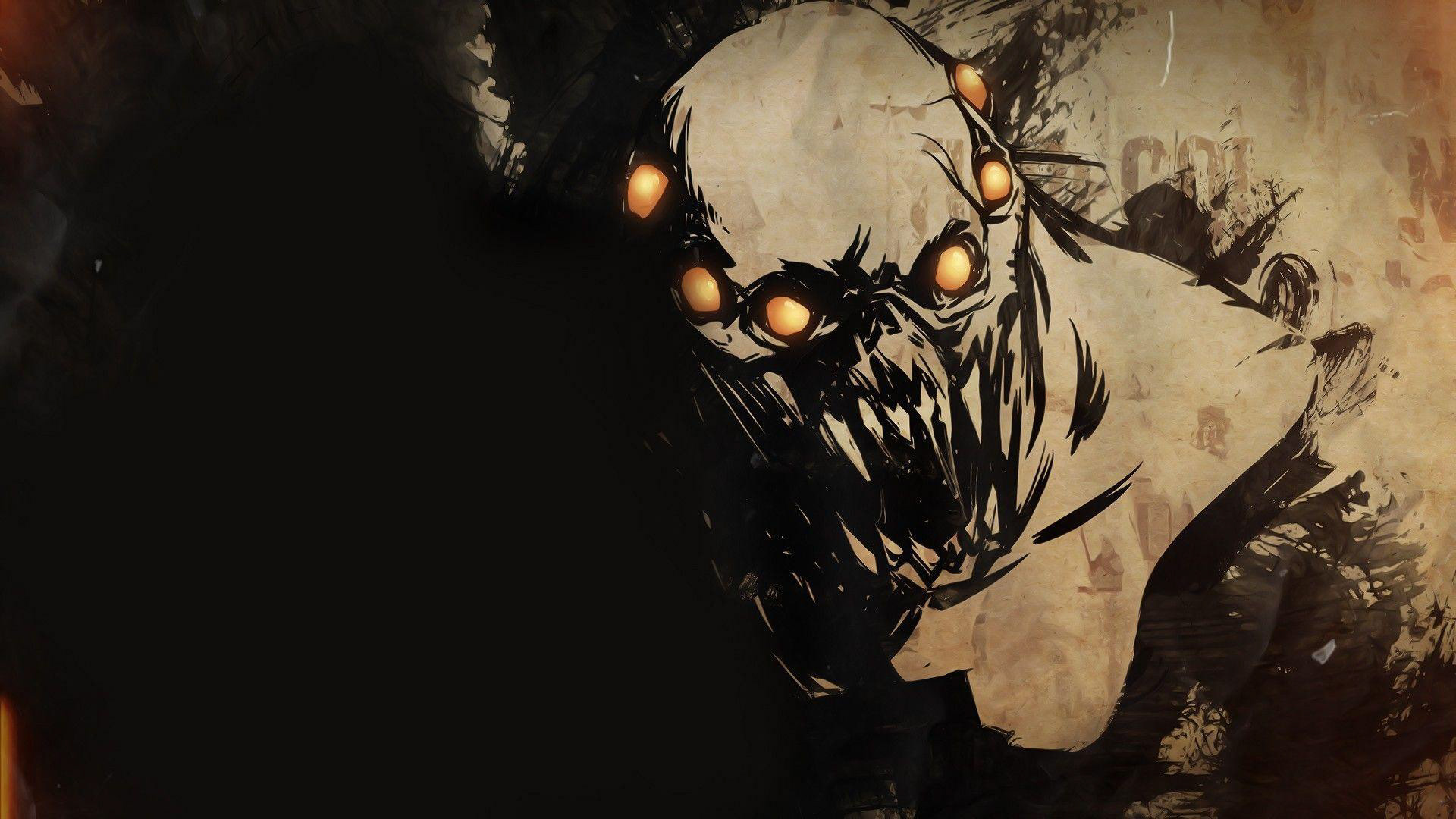
The Chimera are not zombies. They are not monsters in the traditional sense. They are a system.
Humans are not simply killed. They are converted. Repurposed. Integrated. Larger Chimera units are composed of multiple human bodies. Smaller enemies represent different stages of transformation. Infection is inevitable. Incubation accelerates it.
This is not body horror for shock value. It is existential horror rooted in erasure.
The most disturbing aspect of the Chimera is not how they look, but how they operate: they terraform environments to regulate temperature, they build networks of towers to coordinate activity, they require coal and infrastructure to sustain expansion, and they transform the planet to suit their biology.
This is not conquest driven by emotion.
It is optimization driven by necessity.
Fighting the Chimera is psychologically destabilizing because you are not destroying an enemy culture. You are dismantling a process that has already absorbed your own.
Escalation Without Illusion
Resistance's narrative escalation mirrors its mechanical escalation. Early missions focus on containment and survival. Mid-game missions emphasize disruption and sabotage. Late-game objectives shift toward systemic collapse: destroying towers, severing networks, and attacking infrastructure rather than individuals.
By the final act, the war feels unwinnable in a traditional sense. Victory is reframed as delay. Destruction becomes triage.
When the final Chimera tower is destroyed, the moment is visually spectacular, but narratively restrained. It does not promise salvation. It promises interruption.
The extraction of Hale in the closing moments crystallizes the game's thesis. He is not celebrated. He is reclaimed. Surrounded by American soldiers, grenade in hand, Hale hesitates, not because he fears death, but because he understands what survival now means.
He is no longer just a soldier.
He is an asset.
And the people retrieving him already know that.
Why the Story Works
Resistance succeeds narratively because it refuses to over-explain itself. It trusts implication. It trusts behavior. It trusts the player to notice patterns and draw conclusions without being guided emotionally.
There are no speeches about hope. No declarations of heroism. No triumphal resolution.
What you get instead is something rarer: a war story that understands momentum, attrition, and loss.
Hale does not change the world.
He survives it, temporarily.
And in Resistance: Fall of Man, that distinction is everything.
💭 PERSONAL TAKE
Even when returning to the same stretches of combat repeatedly, Resistance remained engaging. Not because it was novel, but because it was structurally sound. The weapon sandbox stayed flexible. Encounters remained legible. The game never felt like it was wasting my time or padding its runtime. When I failed, it almost always felt like a misread on my part rather than a systemic flaw.
Revisiting the game over the past several months, replaying missions to test weapons, approaches, and pacing, only clarified its intent. Familiarity didn't flatten the experience. It sharpened it. I became more aggressive, more decisive, and more willing to break encounters open instead of defaulting to caution. Resistance rewards that confidence. It wants forward pressure. It punishes hesitation.
That kind of durability isn't accidental. It's the result of design that doesn't rely on novelty to stay engaging. Resistance holds up because its core systems are cohesive, resilient, and honest under repetition.
There's also something worth acknowledging about where Resistance sits today.
Historically, Resistance is easy to overlook. The franchise has been dormant for years. There are no modern ports, no remasters, no ongoing cultural presence. Even now, footage of the game often prompts the same reaction: "What game is this?" And yet, when played today, on original hardware, without revision or modernization, it still works. Not because it's timeless in a technical sense, but because its design philosophy is coherent from start to finish.
Resistance knows what it wants to be. It does not chase trends. It does not overstay its welcome. It delivers a focused campaign built around escalation, physicality, and forward motion, and then it ends. There is no illusion of endlessness here. No artificial longevity. Just a complete experience.
I don't return to Resistance for comfort. I return to it because it still feels purposeful. Because each mission feels like a chapter rather than filler. Because the combination of weapon variety, environmental response, and narrative restraint prevents the experience from collapsing into routine.
Even replayed. Even scrutinized. Even years later.
There are visible limitations. The framerate is locked. The resolution shows its age. Some encounters can be punishing if approached carelessly. But these are constraints of era, not failures of intent.
What remains is a shooter that respects the player's attention. It asks you to engage with its systems, adapt under pressure, and keep moving forward without constant reassurance.
Resistance is not a comfort game. Its endurance comes from focus, not familiarity.
🧠 CLOSING THOUGHTS
Resistance: Fall of Man is a game that understands something many shooters never do: cohesion matters more than scale.
It does not chase spectacle for its own sake. It does not rely on constant novelty or mechanical inflation. Instead, it commits to a single throughline, forward momentum in a world already collapsing, and aligns every system around that idea. Visual design reinforces exhaustion and conversion. Sound design maintains pressure without manipulation. Gameplay rewards adaptation over stubbornness. The story communicates through implication rather than declaration.
Nothing here exists in isolation.
Everything supports everything else.
That cohesion is why the game survives repeated scrutiny. It is why replaying large portions of the campaign does not expose it as shallow. It is why fatigue reveals clarity instead of resentment. Resistance does not ask to be remembered fondly. It asks to be understood.
Historically, the game occupies an odd position. It was a PlayStation 3 launch title. It helped establish Insomniac as a studio capable of more than stylization and charm. And yet, the franchise has quietly disappeared. No remasters. No modern ports. No recontextualization for new audiences. In a landscape saturated with revivals, Resistance remains stranded on its original hardware.
And somehow, that feels appropriate.
Resistance does not need reinvention to justify itself. It does not rely on cultural momentum or multiplayer legacy. It stands as a complete statement: a war story told without hero worship, without illusion, and without closure.
Nathan Hale does not save the world. He delays its erasure. And even that comes at a cost.
The final image of the game is not triumph. It is containment. Hale survives, but he is no longer fully his own. He is extracted, not celebrated. The war continues elsewhere. The system persists. The record is filed away.
That restraint, that refusal to grant easy resolution, is what makes Resistance endure. It does not flatter the player. It does not overexplain itself. It trusts that if you are paying attention, you will understand what it is doing and why.
Nearly two decades later, Resistance: Fall of Man still feels deliberate, grounded, and mechanically honest. It shows its age technically, but never philosophically. Where it stumbles, those moments stand out precisely because the rest of the experience is so controlled.
This is not a forgotten game because it failed.
It is forgotten because it never begged to be remembered.
And that quiet confidence, rare then, and rarer now, is why it still matters.