🔥 INTRODUCTION
Released in November 2006, Call of Duty 3 is the entry I somehow missed for nearly two decades, even while the franchise kept expanding into a cultural machine. I came into it directly off a full Call of Duty 2 playthrough with modest expectations. Another World War II campaign, another push through Europe, another game from an era where the series was still learning what it wanted to be.
Instead, I walked away thinking something I did not expect to think at all: Call of Duty 3 is rough, sometimes genuinely messy, but it is also one of the first moments where the franchise starts reaching for a different kind of identity.
On paper, this game sits in an awkward position. It is the third mainline installment, developed by Treyarch, and it is also the only mainline Call of Duty that was never released on PC. It launched during the transition into PlayStation 3 and Wii, and it was even positioned as a launch title for those platforms in multiple regions. That transitional moment is visible in the final product. The scope is big, the ambition is clear, and the seams show.
Where Call of Duty 2 often treats World War II like a force of nature, an overwhelming storm where the war itself becomes the protagonist, Call of Duty 3 shifts its attention toward people. Not heroes in the mythic sense, but squads, tired leadership, fear in the voice, and sacrifice that arrives fast and without ceremony. The campaign is less interested in making you feel like a surgical instrument and more interested in making you feel embedded, surrounded by imperfect allies in a situation nobody fully controls.
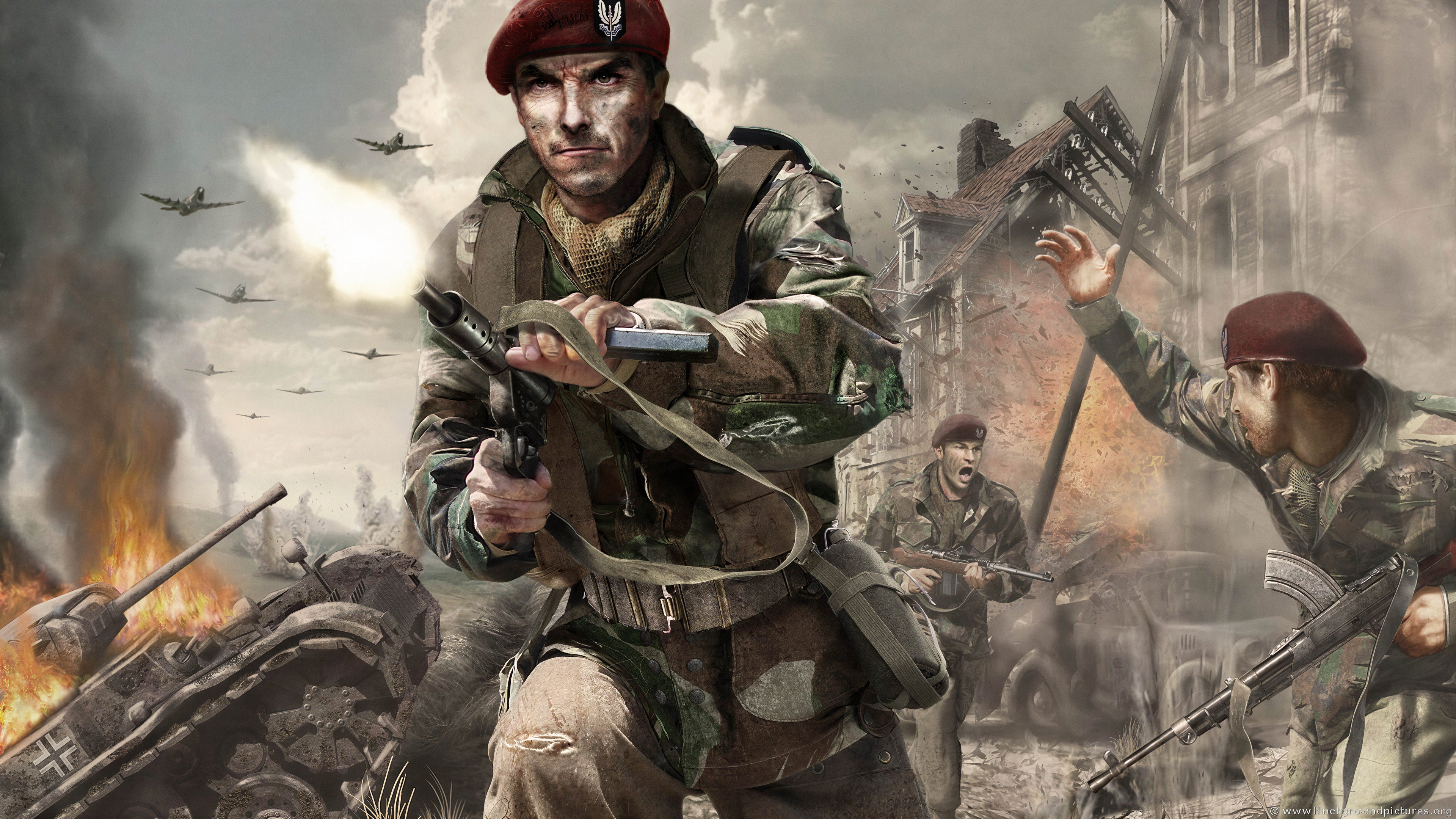
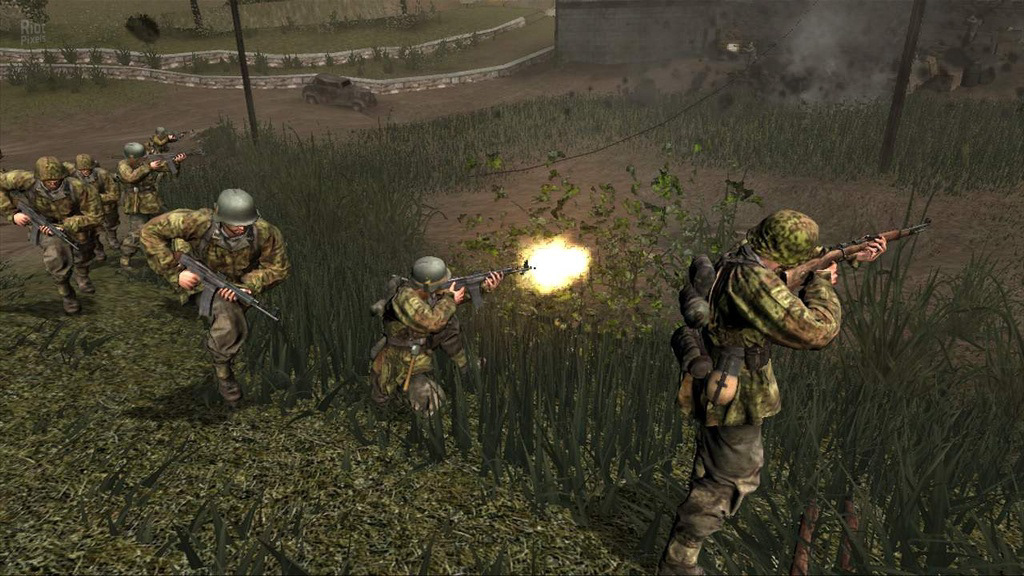
That intention shows up immediately in the structure. Call of Duty 3 is built around the Normandy breakout and the closing of the Falaise Pocket, a setting that naturally lends itself to a combined Allied viewpoint. Instead of following one unit from beginning to end, the game repeatedly shifts you between Americans, British forces (including SAS framing), French Resistance, Canadians, and Polish soldiers, pushing the idea that this battle was not a single narrative thread, but a convergence of many.
Ambitious, yes. Clean, no.
The tradeoff is clarity. The player is asked to form attachments quickly, then abandon them quickly. Characters make an impression, sometimes a strong one, and then the camera cuts away because the war does not wait for emotional closure. If you judge this purely as storytelling craft, you can call it fragmented. If you judge it as a theme, it becomes more interesting, because the disorientation starts to feel like part of the message. You are not meant to settle in. Comfort is not part of the design.
This is where Call of Duty 3 quietly separates itself. It is less a hero narrative and more a portrait of a collective psyche under strain. Each squad becomes a different mask worn by the same underlying human condition: fear, duty, pride, resignation, irritation, humor as defense, leadership as pressure rather than glory. The game's constant perspective shifts can feel like a flaw, but they also reinforce the idea that no single individual owns this story. The "self" of the campaign is not one soldier. It is the coalition, the shared burden, the collective shadow moving across Normandy.
And that is why this game stuck with me.
Call of Duty 3 is not the most polished campaign in the franchise. It is not the most iconic. It does not have the clean narrative spine that Call of Duty 4 would soon deliver. But it feels like a transitional step toward that future, an early attempt to move beyond war as pure spectacle and toward war as lived experience, fractured, multinational, and human.
This definitive assessment is about how well that attempt succeeds, where it stumbles, and why Call of Duty 3 deserves more consideration than its reputation suggests.
🌄 VISUALS & WORLD DESIGN
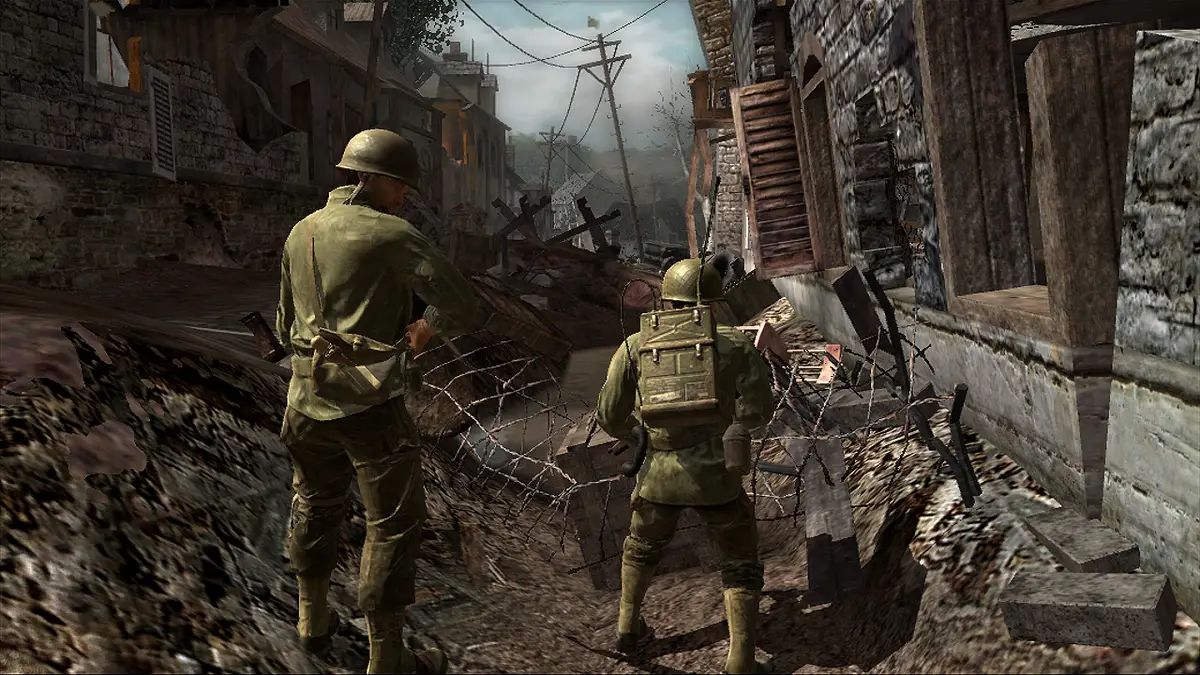
Visually, Call of Duty 3 does not attempt to redefine its era. It clearly shares DNA with Call of Duty and Call of Duty 2 in character models, texture resolution, and overall technical limits. View distance is modest, aliasing is visible, and environmental detail degrades quickly at range. Yet the game succeeds where raw fidelity matters least and meaning matters most: it creates environments that feel psychologically coherent.
These spaces are not neutral backdrops but symbolic containers for experience. The battlefield in Call of Duty 3 consistently presents itself as a wounded landscape: villages torn apart, churches repurposed as combat zones, and countryside scarred by armor and artillery. These are not clean arenas designed for combat flow. They are places that once supported civilian life and no longer can.
What distinguishes these environments from those in Call of Duty 2 is not complexity, but implication. Streets feel recently evacuated rather than long abandoned. Interiors collapse inward, forcing close quarters movement through spaces that still suggest domestic purpose. The war is not staged in abstract locations; it intrudes into places that once held routine, identity, and meaning. Psychologically, this grounds the experience. You are not conquering space; you are moving through loss.
The campaign's steady environmental variety (hedgerows, forests, towns, industrial zones, and open countryside) reinforces a sense of irreversible forward motion. The player rarely backtracks. Each location feels like another threshold crossed rather than a space to be mastered. From a Jungian lens, this mirrors a descent into the shadow: as the campaign progresses, destruction becomes normalized, and intact spaces grow increasingly rare.
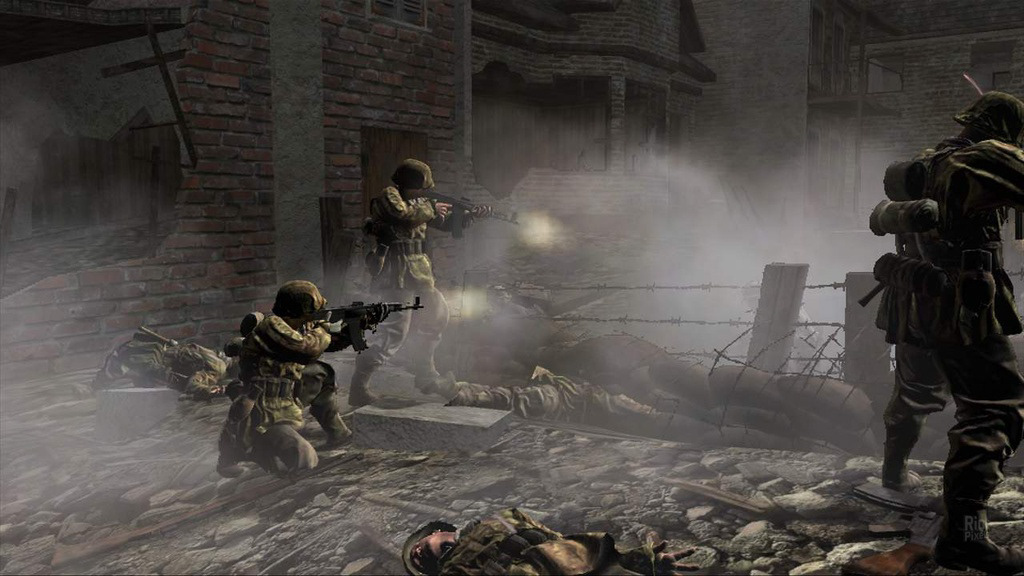
One of the game's most effective visual choices is its reliance on implied destruction. Large scale dynamic destruction is minimal, yet the environments convincingly suggest violence that has already occurred. Craters, debris, broken sightlines, and collapsed structures communicate history without spectacle. This restraint aligns with the campaign's broader tone. The world does not shatter for the player's benefit; it is already fractured when they arrive.
There is also an emerging visual identity that foreshadows later work by Treyarch. Smoke density, explosions, and battlefield clutter feel rough and abrasive rather than cinematic and clean. Visibility is often compromised, not merely by technical limitation, but by design. Confusion is part of the environment. Perfect readability is never guaranteed.
This does create friction. Enemy and friendly silhouettes can blur together, especially in dense urban encounters and smoke heavy engagements. Directional clarity occasionally suffers, particularly during vehicle sequences. These moments briefly remind the player of the game's age, but they also reinforce its intent. War is not clean. It does not prioritize clarity.
Ultimately, Call of Duty 3's world design succeeds because it aligns emotionally with the story it tells. The environments feel scarred, transitional, and unstable, mirroring the psychological state of the soldiers moving through them. In Jungian terms, these spaces function as a collective unconscious of war: shared landscapes shaped by fear, duty, loss, and endurance.
The game does not glorify destruction. It normalizes it.
And in doing so, it reinforces a central idea that runs through the entire campaign: this war is not about triumph, but about continuing forward through a world that no longer supports human life the way it once did.
🔊 SOUND DESIGN
Audio in Call of Duty 3 does not demand attention on its own, but it quietly carries much of the campaign's psychological weight. Where the visuals establish a scarred landscape, the audio reinforces a constant state of pressure: unease punctuated by sudden violence and brief, fragile moments of quiet.
Sound operates closer to the unconscious than visuals. We react to it before we rationalize it. Call of Duty 3 understands this, using audio not to guide heroism, but to condition stress, disorientation, and vulnerability.
Gunfire is sharp, aggressive, and immediate. Weapons carry distinct sonic identities that communicate role and threat without visual confirmation. Light machine guns sound oppressive and relentless. Rifles feel deliberate and controlled. Submachine guns fire in nervous, anxious bursts. The shotgun stands out in particular: its report is heavy and concussive, conveying raw stopping power even when its mechanical effectiveness remains situational. Psychologically, the sound alone reinforces proximity and danger. When the shotgun comes out, the situation has already collapsed into desperation.
Explosions and artillery are mixed brutally loud, often overwhelming other audio layers. Nearby detonations trigger the familiar ringing effect that briefly dulls the soundscape. This is not just a gameplay cue; it simulates sensory overload. For a moment, clarity disappears. Orders blur. Awareness collapses inward. These moments reinforce a recurring theme: the battlefield does not wait for the player to regain control.
Vehicle audio continues this philosophy. Tanks feel heavy, slow, and intimidating, not because of speed or fire rate, but because of their low frequency presence. Engine rumble, turret rotation, and delayed cannon fire communicate inertia rather than dominance. Power exists, but it is never clean or precise.
Music is used sparingly and with restraint. When it appears, it leans into traditional World War II orchestration: somber strings during losses, restrained swells during large scale engagements. Crucially, the score knows when to withdraw. After moments of death or sacrifice, music often fades, leaving ambient sound and dialogue to carry the emotional weight. This absence prevents romanticization. The player is not guided toward catharsis; they are left to sit with the aftermath.
Dialogue and squad chatter further humanize the experience. Performances feel grounded, natural, and rarely theatrical. Banter, frustration, humor, and fear emerge organically, serving as psychological coping mechanisms rather than scripted personality traits. From a Jungian lens, this dialogue represents the ego attempting to maintain cohesion under constant threat: small verbal anchors in a reality that keeps destabilizing.
Not every line is memorable, and no single performance dominates the campaign. But collectively, the voices succeed in making squads feel inhabited rather than staged. Orders sound reactive. Shouts feel situational. Deaths are acknowledged briefly, then absorbed into the forward motion. The war does not pause for grief.
The primary weakness of the audio design is occasional clutter. In the most chaotic encounters, gunfire, shouting, explosions, and music compete for space, sometimes reducing clarity. Yet even this aligns with the campaign's intent. War is loud. It is messy. It does not prioritize readability.
Call of Duty 3's audio functions as the campaign's emotional shadow. It does not seek admiration. It conditions stress, reinforces uncertainty, and amplifies loss without dramatizing it. Combined with the visual design, the soundscape transforms the battlefield from a stage into a psychological environment: one where survival is measured not by dominance, but by endurance.
⚔️ GAMEPLAY
At a mechanical level, Call of Duty 3 does not reinvent the franchise, but it does reposition it. The core structure remains familiar (linear missions, scripted encounters, squad based forward momentum), but the way the player is asked to engage with these systems feels more deliberate and, at times, more psychologically demanding than in Call of Duty 2.
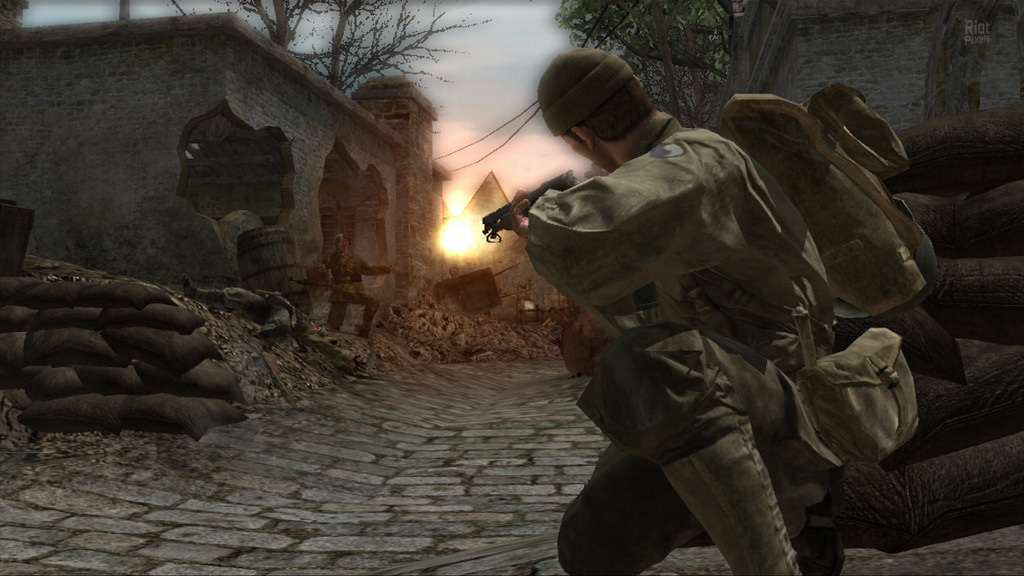
Gunplay is the most immediate improvement. Aiming and weapon handling feel smoother and more readable, with better feedback when snapping into iron sights and tracking targets under pressure. Even without leaning heavily on aim assist, weapons feel controllable rather than slippery. This matters because it subtly shifts the player's mental state. Instead of fighting the controls while fighting the enemy, the player is freed to read the battlefield.
Enemy pressure remains intense, but its logic is clearer. Where Call of Duty 2 often relied on overwhelming, sometimes opaque enemy spawns, Call of Duty 3 introduces encounters that resolve through action rather than attrition. Enemies frequently continue to push until the player advances, flanks, or completes a specific objective. Psychologically, this reframes combat from survival alone to interpretation. You are not just reacting; you are diagnosing what the encounter demands.
This represents a shift from chaos to confrontation with the shadow. Instinctive aggression is no longer enough. Impatience is punished. Situational awareness becomes essential. Smoke grenades gain genuine tactical value, semi automatic rifles reward restraint, and positioning begins to matter more than raw reflex. Progress comes not from dominance, but from adaptation.
Vehicle sections (tanks, jeeps, mounted machine guns) are used primarily as pacing tools rather than sustained power fantasies. They expand the scale of the conflict without overstaying their welcome. Tank gameplay in particular emphasizes weight and inertia. Input delay, slow turret rotation, and limited visibility reinforce the idea that these machines are powerful but not extensions of the player's will. Control exists, but it is mediated, imperfect, and slow to respond.
One of the most distinctive gameplay elements is the frequent use of contextual mechanics and quick time interactions. Disarming explosives, planting charges, engaging in close quarters struggles, calibrating mortars, and directing artillery introduce physicality beyond shooting. These moments ask the player to perform actions rather than simply aim and fire, reinforcing immersion through embodiment.
Not all of these systems land equally well. Mortar and artillery controls (often tied to rotational inputs rather than directional aiming) can feel unintuitive and occasionally frustrating. Fuse based interactions, effective early on, risk feeling repetitive as the campaign progresses. These moments reveal a studio experimenting with immersion before fully refining how to integrate it seamlessly.
Squad AI remains functional but imperfect. Teammates generally move with purpose and provide cover, yet they can occasionally obstruct movement or funnel the player into narrow paths. These frustrations are familiar to the era and feel more like inherited design constraints than conceptual failures.
Difficulty overall is fair. The game rarely feels punitive unless the player ignores positioning or advances recklessly. Deaths tend to feel earned, the result of impatience or misreading the encounter rather than unfair design. Late campaign spikes in enemy density encourage reassessment rather than brute force. Retreating, re-approaching, and adapting become legitimate strategies, reinforcing the idea that survival depends on judgment as much as accuracy.
Psychologically, Call of Duty 3's gameplay expresses a constant tension between control and surrender. The player is given smoother tools, clearer feedback, and more tactical options, yet is repeatedly reminded that the battlefield cannot be fully mastered. You are competent, but never dominant. Effective, but never safe.
While these mechanics may feel modest by modern standards, they are carefully aligned with the campaign's broader themes. Combat is not framed as empowerment for its own sake. Instead, the systems reinforce endurance, restraint, and the necessity of pushing forward even when certainty is absent.
This balance (between refinement and experimentation, structure and chaos) defines Call of Duty 3's gameplay identity. It may lack the mechanical elegance of later entries, but it represents a meaningful step toward a more grounded, psychologically aware approach to combat within the series.
📖 STORY & CHARACTERS
If Call of Duty 3 is remembered at all, it is usually remembered for its messiness. Fragmented perspectives. Rapid shifts between factions. Characters who appear, register emotionally, and disappear before the player can fully attach. Yet this very instability is also where the campaign finds its meaning.
More than any other element, story and character define what Call of Duty 3 is trying to do.
Unlike later entries that center themselves around a singular, iconic protagonist, Call of Duty 3 deliberately rejects the heroic throughline. There is no Soap, no Price, no figure who carries the narrative from beginning to end. Instead, the game presents war as a collective psychological experience: a web of individuals temporarily intersecting under pressure before being swallowed by the larger conflict.
This is not a hero's journey. It is a portrait of a collective psyche under strain.
The American Campaign: Leadership Through Loss
The American sections form the closest thing the game has to an emotional spine. Here, leadership is not framed as confidence or competence, but as weight. Authority figures hesitate, argue, and fracture under responsibility. When death occurs (and it often does), it is not framed as triumph or sacrifice in the mythic sense. It is abrupt, disorienting, and final.
What makes these moments resonate is restraint. Characters are not over-written. They are sketched through tone, pressure, and reaction. Promotions follow deaths not as rewards, but as burdens inherited unwillingly. Leadership becomes something imposed rather than earned. This reflects the ego being forced to integrate responsibility through trauma, not aspiration.
The game makes a quiet but powerful point: in war, command is often assumed by the last one standing.
British SAS & French Resistance: Trust Under Fire
The British and French sections introduce a different psychological dynamic: mistrust and moral friction. Early interactions are strained. Cultural dismissal, impatience, and skepticism surface quickly. Cooperation is not assumed; it is negotiated under threat.
The French Resistance, in particular, occupies a crucial symbolic role. They represent the civilian shadow of the war: individuals who cannot retreat behind military abstraction. Their losses feel heavier because they are tied to home, identity, and place. When they die, it feels less like a battlefield casualty and more like an erasure of continuity.
From a Jungian standpoint, they embody the part of the human psyche that cannot compartmentalize conflict. The war follows them everywhere. There is no separation between duty and self.
The Canadian Campaign: Ego vs Responsibility
The Canadian missions explore a subtler but equally important tension: the collision between pride and restraint. Leadership here is flawed, sometimes driven by ego as much as duty. Decisions are made quickly, under pressure, and not always wisely.
What the game does well is refuse to moralize these choices. Recklessness is not framed as villainy, and caution is not framed as cowardice. Instead, outcomes are shown plainly. Actions have consequences. Sacrifices emerge not from evil intent, but from human miscalculation.
Psychologically, this arc confronts the danger of the unchecked ego: the part of the self that equates bravery with assertion, even when restraint would preserve life.
The Polish Defense: Endurance Without Illusion
The Polish campaign functions as the emotional culmination of Call of Duty 3. These missions strip away any remaining illusion of advancement or momentum. There is no push forward, only holding ground. The soldiers are isolated, undersupplied, and uncertain whether relief will arrive.
This is war reduced to endurance.
From a Jungian perspective, this represents confrontation with the shadow in its purest form. There is no victory to be imagined, no heroism to be claimed. Survival becomes an act of will rather than belief. The soldiers continue not because they expect reward, but because stopping would mean annihilation.
It is here that the campaign's fragmented structure finally justifies itself. The player has seen war from multiple perspectives, and all of them converge emotionally in this final stand. Not as narrative closure, but as psychological resolution.
Fragmentation as Meaning
The most common criticism of Call of Duty 3's story (that it is disjointed and hard to follow) is also its most revealing trait. The player never stays long enough with any one group to feel comfortable. Bonds form quickly and dissolve just as fast. Names blur. Faces disappear.
This is not elegant storytelling, but it is experientially honest.
In war, individuals rarely possess a complete narrative. They understand only their immediate context. Confusion is not a failure of communication; it is the reality of the system. By denying the player a single, stable protagonist, the game forces identification with the collective rather than the individual.
Acts of heroism are not rewarded with survival or legacy. They are absorbed into outcomes. The war moves on.
Why It Works
Despite uneven pacing and limited character development, the campaign succeeds because it treats its characters as people rather than symbols. Fear, irritation, humor, doubt, pride, and resolve coexist without hierarchy. No one is mythologized. No one is protected by narrative importance.
In Jungian terms, Call of Duty 3 rejects the heroic myth and replaces it with something quieter and more uncomfortable: meaning is found in action itself, not in recognition.
The story is not about who wins. It is about what it costs to make winning possible.
And that is why, even in its fragmentation, Call of Duty 3 delivers one of the most emotionally honest narratives in the franchise.
💭 PERSONAL TAKE
Playing Call of Duty 3 for the first time nearly two decades after its release genuinely caught me off guard. I expected a functional bridge between Call of Duty 2 and what would soon become Call of Duty 4. What I found instead was a campaign that, while clearly strained by ambition and circumstance, felt more thoughtful than its reputation suggests.
This is not a clean experience. The structure is fractured, the perspective shifts are abrupt, and the story sometimes moves too quickly for its characters to fully settle in. I did, at times, lose track of units and narrative overlap. That fragmentation is real, and it does affect cohesion. But what surprised me is that it never felt careless. It felt intentional, even when imperfect: like a game reaching beyond its grasp rather than settling for comfort.
What resonated most was how the campaign frames war as a series of human breaking points rather than a power fantasy. Characters are not defined by speeches or mythic purpose, but by how they behave when pressure collapses their options. Fear sits next to bravery. Ego clashes with responsibility. Leadership emerges not through triumph, but through loss. And the people who step forward rarely get rewarded for it.
I also appreciated how grounded the tone felt compared to many later World War II entries. Call of Duty 3 does not over-contextualize the conflict or lean heavily on exposition. It keeps the camera low, close to the squads on the ground. You are not witnessing history from a distance; you are experiencing it in fragments, through confusion, exhaustion, and incomplete understanding. That approach made the campaign feel personal, even when it was disorienting.
Mechanically, the game remains enjoyable. Gunplay feels smoother than Call of Duty 2, the pacing benefits from vehicle and mortar sequences, and the moment to moment combat holds tension well. It can become repetitive in longer sessions, but played in focused bursts, it maintains momentum. I never felt bored. When I failed, it was usually because I rushed, not because the game felt unfair.
Most importantly, Call of Duty 3 left an impression. Not because it dazzled, but because it lingered. It feels like a game caught mid-transition: caught between spectacle and sincerity, between old school chaos and emerging cinematic restraint. Some of its ideas would be refined later. Others would be abandoned entirely. But here, they exist in a raw, uneven form that still carries emotional weight.
I walked away with respect for what this game attempted. It may not define the franchise, but it quietly challenges the idea that early Call of Duty was only about noise and numbers. In its own flawed way, Call of Duty 3 reaches for something more human, and that effort is worth acknowledging.

🧠 CLOSING THOUGHTS
Call of Duty 3 occupies an unusual, often overlooked position in the franchise's history. It exists in the narrow space between the raw, chaotic identity of the early World War II entries and the cinematic clarity that would arrive with Call of Duty 4. In that gap, it becomes something transitional: unfinished in places, uneven in execution, but quietly searching for a deeper emotional language.
Its greatest strength is also its most visible weakness. By attempting to portray the Normandy campaign through a combined Allied perspective, the game gains thematic weight but sacrifices narrative cohesion. The war feels larger, more interconnected, and more costly, but also harder to track. Characters arrive and leave quickly. Arcs form and dissolve midstream. The campaign rarely slows down long enough to provide clean emotional resolution.
Yet that very instability is what gives Call of Duty 3 its honesty.
This is not a story about dominance, mastery, or heroic inevitability. It does not build toward a singular, iconic figure or a mythic victory moment. Instead, it presents war as a system that consumes people, redistributes responsibility, and moves forward regardless of individual intention. Leadership is inherited through loss. Courage appears at the worst possible time. Sacrifice is absorbed into outcomes rather than celebrated.
In Jungian terms, the game rejects the heroic myth and replaces it with a collective confrontation with the shadow. There is no integration, no transcendence: only endurance. Meaning is found not in legacy, but in action taken under pressure, even when the outcome is uncertain or unseen.
This does not make Call of Duty 3 the best campaign in the series. It is not the most refined, the most iconic, or the most replayable. But it is one of the most sincere. It treats fear seriously. It allows doubt and failure to coexist with bravery. It avoids glamorizing war, even when its mechanics still belong to an era that thrived on spectacle.
For players willing to meet it on its own terms (and accept its rough edges), Call of Duty 3 offers something rare within the franchise: a grounded, human portrayal of World War II that prioritizes emotional authenticity over narrative polish.
It may be the forgotten one. But it is not an empty one.
And in the long arc of Call of Duty's evolution, it stands as an early, imperfect signal that the series was capable of more than noise and numbers: it was capable of reflection.