🔥 INTRODUCTION
Released in 2007 during the PlayStation 3's uncertain early years, Heavenly Sword occupies an unusual and often overlooked place in gaming history. It emerged at a moment when studios were beginning to pursue cinematic ambition and performance-driven storytelling, but before the medium had fully reconciled those goals with responsive, reliable action design. As a result, the game is frequently remembered less as a complete experience and more as a symbol of early-generation aspiration: a technical showcase, a launch-era experiment, or a footnote in Sony's push toward film-like presentation.
This assessment is based on a full playthrough on original PlayStation 3 hardware, without emulation, performance patches, or modern enhancements. While improved frame rates and visual clarity are possible today, this perspective is grounded in the game as it originally existed. That context matters, because Heavenly Sword is defined by tension between intent and execution. Its ideas consistently reach beyond what the hardware and systems can fully support, and those limitations are not incidental. They actively shape how the game is experienced.
Rather than approaching Heavenly Sword through nostalgia or technical revisionism, this assessment treats it as a closed work, evaluated on its own terms. It is a short, linear, story-driven action game built around spectacle, character performance, and mythic structure. Some of its elements remain strikingly effective, others have aged poorly, and a few undermine the experience outright. The goal here is not to rehabilitate the game as an overlooked masterpiece, nor to dismiss it for its mechanical friction, but to understand how its parts function together and where they fail to align.
What ultimately makes Heavenly Sword worth revisiting is not its combat system or technical achievement, but its clarity of intent. Beneath the uneven mechanics is a story deeply concerned with power, responsibility, and sacrifice: themes expressed not through abstraction, but through character behavior and consequence. The game treats strength as a burden rather than a reward, and agency as something earned through choice rather than destiny. Those ideas give the experience emotional coherence even when the systems carrying them struggle.
This assessment examines Heavenly Sword across its visual design, audio direction, gameplay systems, and narrative structure, with particular attention to how its characters embody different psychological relationships to power, authority, and legacy. The focus is not on whether the game succeeds by modern standards, but on what it attempts, where it fractures under pressure, and why (nearly two decades later) it remains a focused, memorable journey despite its evident friction.
🌄 VISUALS & WORLD DESIGN
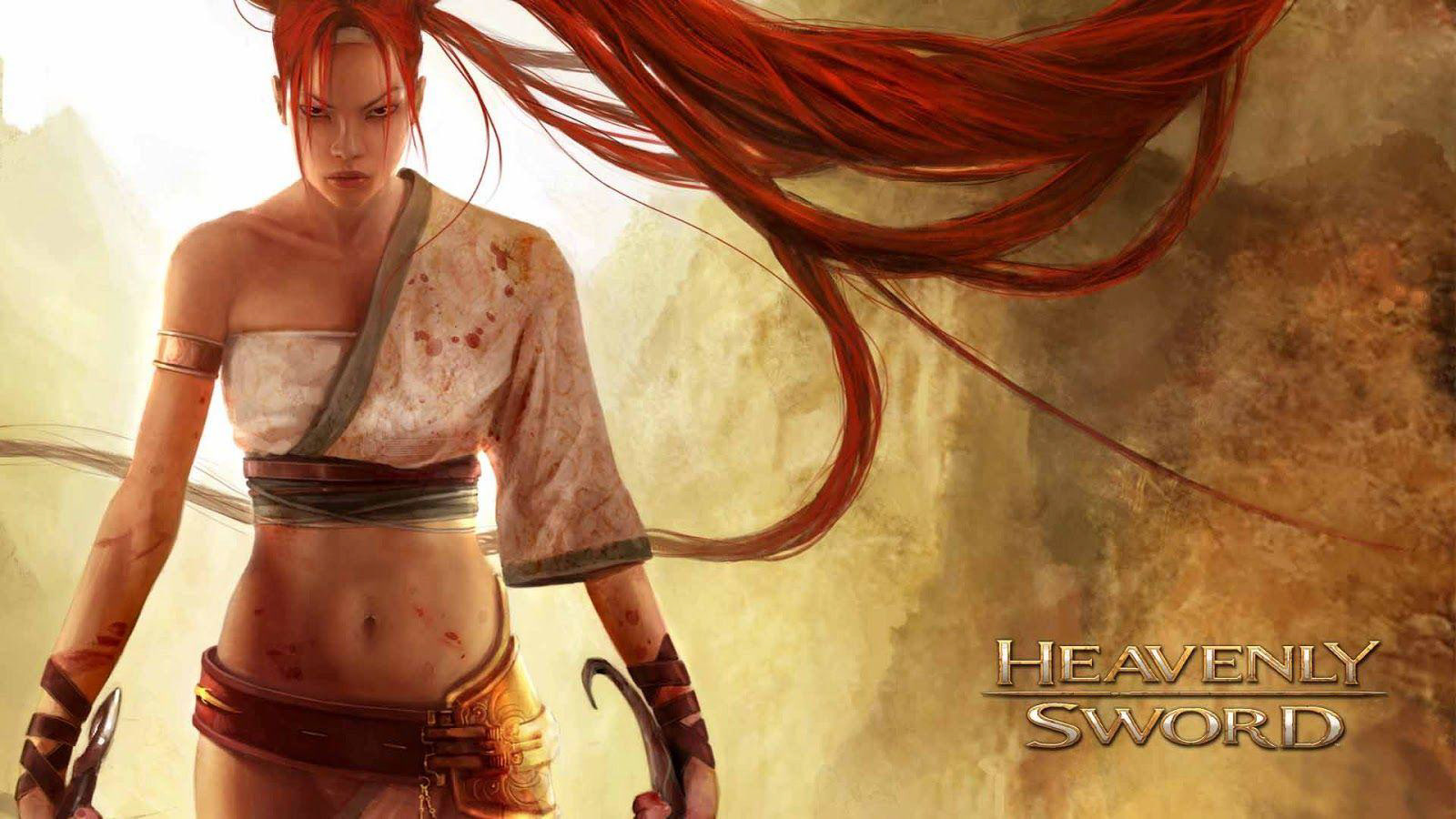
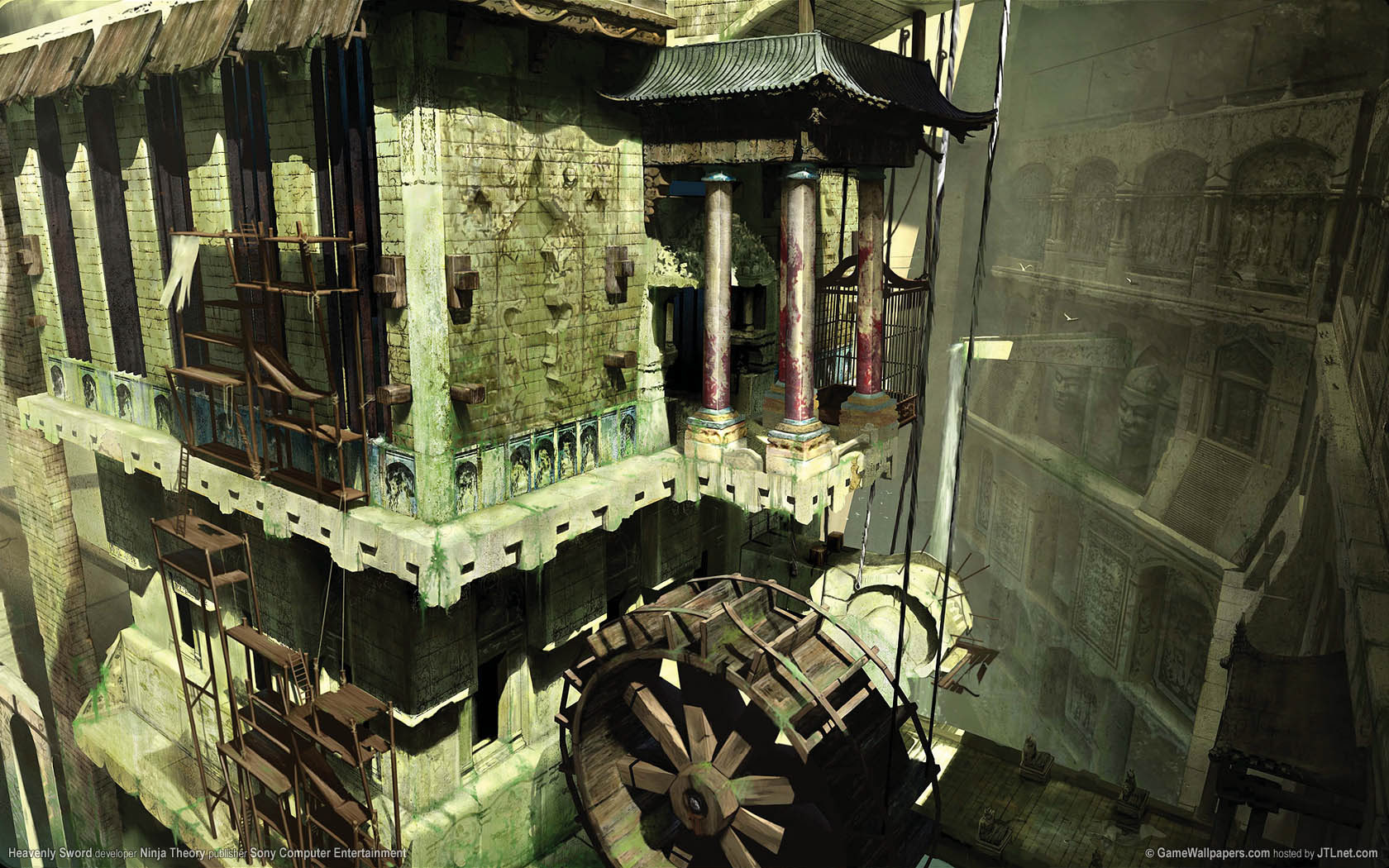
Visually, Heavenly Sword establishes a clear and distinctive identity that relies far more on art direction and symbolic framing than on technical fidelity. Even constrained by early PlayStation 3 hardware, the game presents a world that feels authored rather than assembled. Its environments, architecture, and costuming draw from a blend of Eastern and Western influences without committing fully to either, resulting in a mythic aesthetic that resists easy cultural classification. The world feels ancient, ceremonial, and purpose-built: less like a place that evolved naturally, and more like a stage constructed to carry legend.
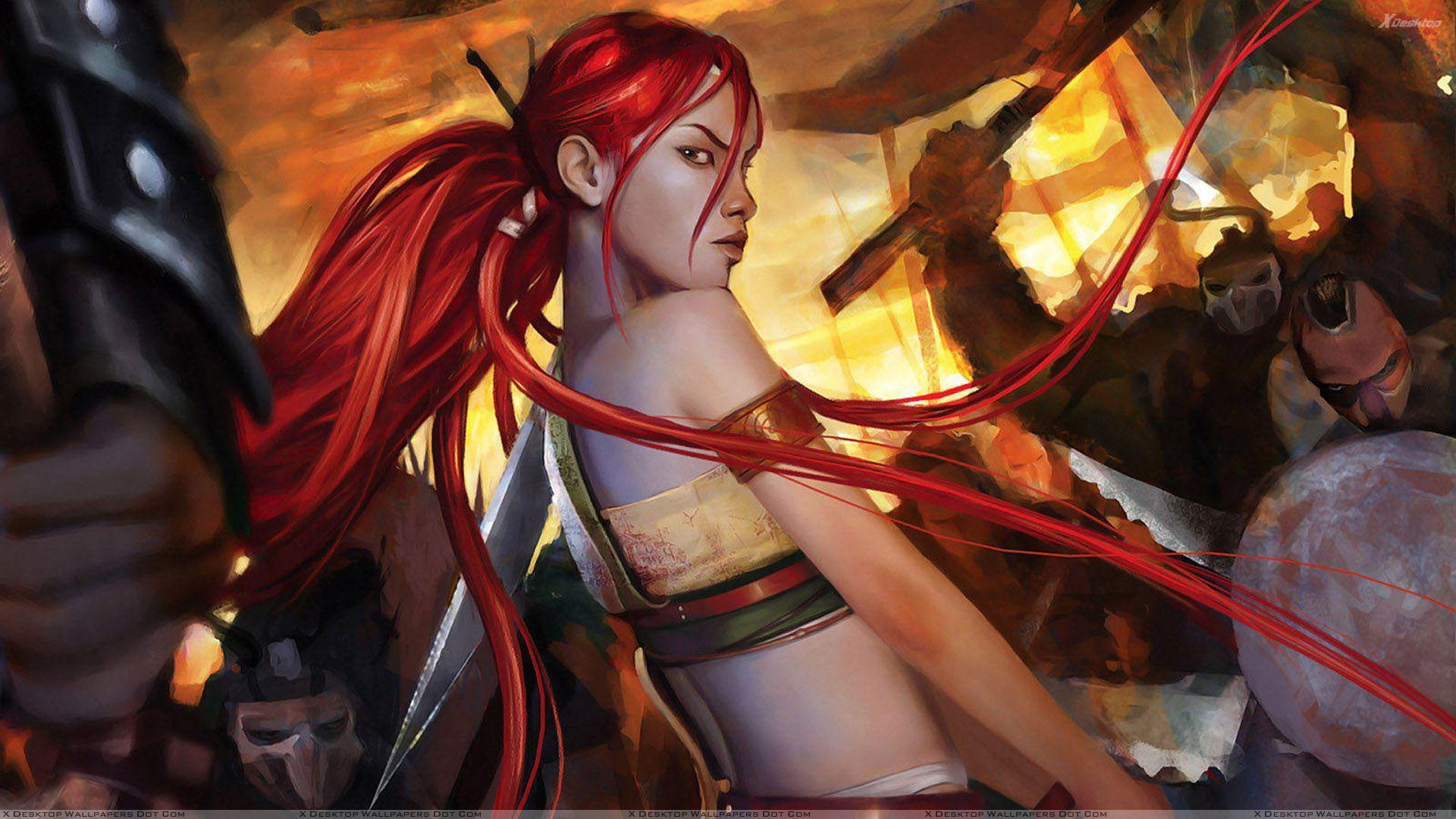
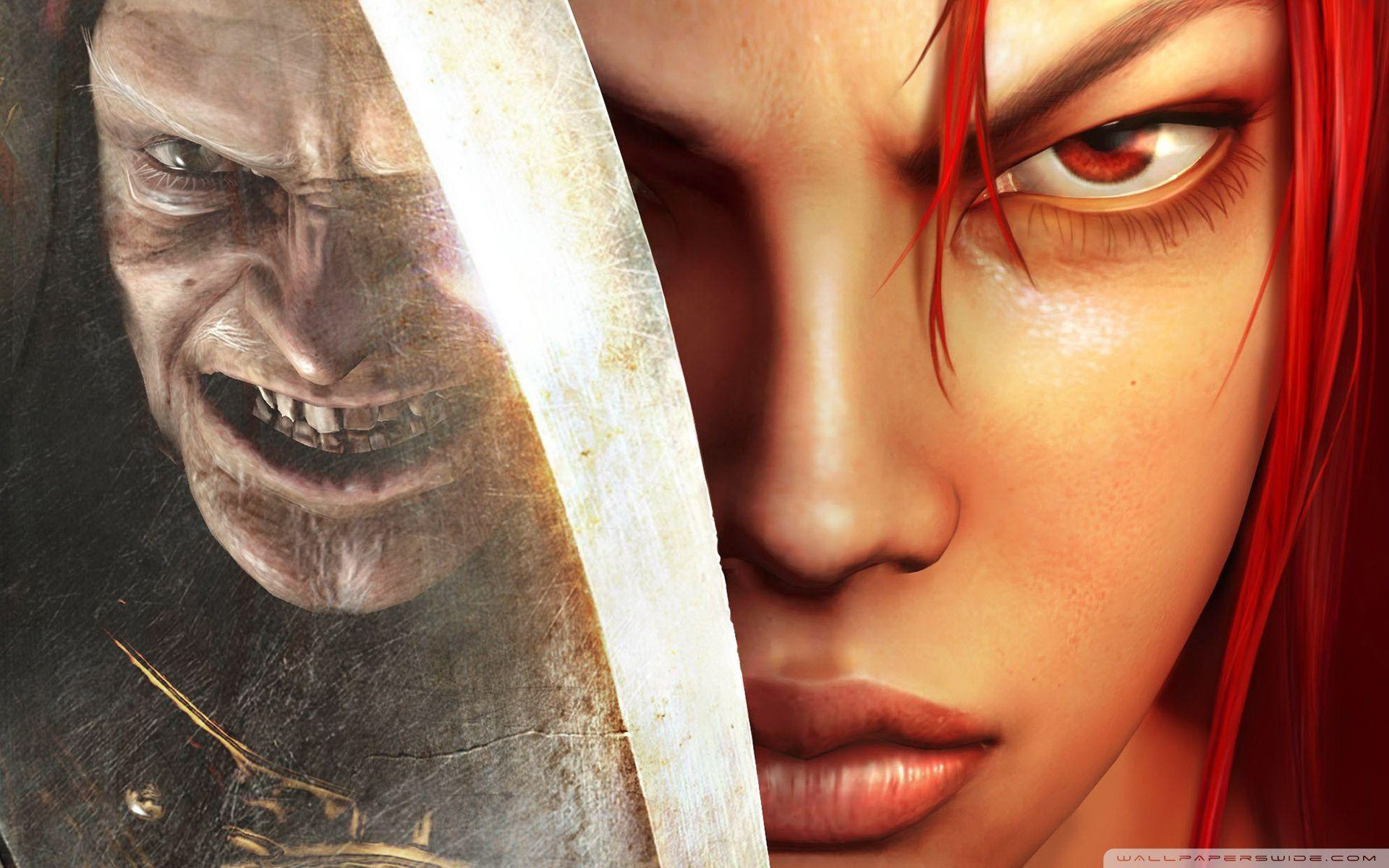
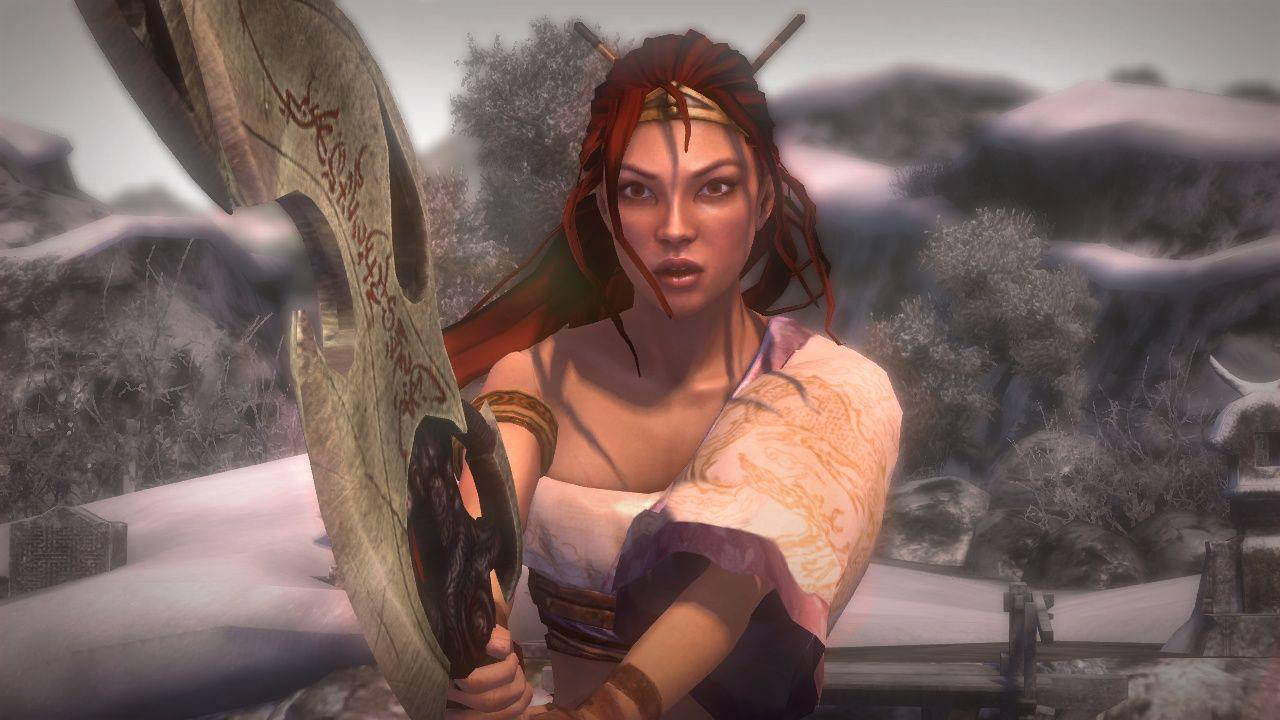
Character design is where this visual philosophy is most effective. Nariko, Kai, Shen, and the antagonists are all immediately legible through silhouette, posture, and visual contrast. Their designs communicate temperament and role before dialogue ever intervenes. Nariko's angular armor and exposed vulnerability reflect tension between defiance and sacrifice. Kai's lighter, more fluid design reinforces her agility and emotional openness. Shen's grounded presence conveys authority rooted in restraint rather than dominance. Even the villains lean heavily into exaggeration (not realism) reinforcing their psychological function within the story rather than attempting grounded plausibility.
This emphasis on character over environment is deliberate. Heavenly Sword is not a game interested in spatial discovery. Levels are tightly controlled, strictly linear, and designed to move the player forward at a measured pace. There are no meaningful deviations, optional paths, or environmental storytelling through exploration. Instead, scale is communicated cinematically. The camera frequently pulls back to frame massive structures, distant armies, and towering landscapes that the player rarely inhabits directly. Grandeur is implied through composition rather than interaction.
That choice creates an important distinction. The world of Heavenly Sword is not meant to be lived in; it is meant to be witnessed. Environments function as psychological backdrops: spaces that reinforce mood, hierarchy, and mythic weight rather than systems to be navigated. This aligns with the game's theatrical ambitions, but it also limits player agency. The sense of scale rarely translates into mechanical freedom, and the world often feels smaller than it looks.
Technically, the game shows its age clearly. Aliasing is heavy, textures are coarse, and geometry lacks fine detail. Frame pacing can become inconsistent during combat-heavy sequences, directly affecting responsiveness and visual clarity. These limitations are most disruptive during gameplay, where precision and timing matter. The contrast between the game's cinematic ambition and its mechanical smoothness is impossible to ignore, and it reinforces the sense that the vision exceeded what the hardware could reliably deliver.
Cutscenes, however, hold up considerably better. Direction, composition, and performance capture carry emotional weight even when fidelity falters. Transitions between gameplay and cinematics are smooth, reinforcing the game's film-like structure and maintaining narrative momentum. When Heavenly Sword leans fully into authored presentation (controlled angles, expressive performances, and deliberate pacing) it often achieves a level of impact that gameplay visuals struggle to match.
Ultimately, Heavenly Sword succeeds visually not because it pushes technical boundaries, but because it commits to a clear visual language. Its world is symbolic rather than expansive, theatrical rather than exploratory. The tension between spectacle and interactivity defines the experience: the game looks most confident when it asks the player to observe and feel, and most fragile when it demands precision and control. That imbalance is not incidental. It is a defining characteristic of the game's identity.
🔊 SOUND DESIGN
If Heavenly Sword struggles mechanically under the weight of its ambition, its audio design consistently carries the experience forward. Sound is where the game achieves its most reliable sense of control, clarity, and emotional precision. While visuals and gameplay are often constrained by performance and responsiveness, the soundscape remains focused, deliberate, and remarkably effective at reinforcing tone and character.
Voice acting is the cornerstone. Andy Serkis's performance as King Bohan is not simply memorable; it is structurally essential. Bohan's voice is theatrical, excessive, and unapologetically indulgent. He sneers, boasts, whines, and rages with no internal restraint. This is not villainy built on intimidation alone, but on psychological exposure. Bohan does not conceal his hunger for power; he performs it. His vocal delivery externalizes ego so completely that it becomes grotesque, turning domination into self-parody without ever undermining threat. The performance ensures that Bohan is not just an antagonist, but a living embodiment of power pursued without reflection.
Anna Torv's portrayal of Nariko provides a deliberate counterweight. Where Bohan spills outward, Nariko's voice carries tension inward. Her delivery balances defiance with restraint, resolve with fatigue. She never sounds intoxicated by power, even when wielding it. Instead, her performance conveys awareness: an understanding of consequence that sits beneath every line. That psychological grounding is crucial. Nariko's strength is not framed as exhilaration, but as responsibility endured. The voice work reinforces that distinction consistently, giving the character emotional credibility even when gameplay systems falter.
Supporting performances deepen this contrast. Michael Fassbender's Flying Fox is defined by instability. His bravado never fully masks the desperation beneath it, and the cracks in his voice expose a character shaped by insecurity and unmet validation. Whiptail's delivery strips empathy entirely, favoring control and cruelty without hesitation. Each voice does specific psychological work. None of the antagonists blur together sonically, and none feel incidental. Even when screen time is limited, vocal identity ensures clarity of role and motivation.
The musical score supports this character-driven focus rather than competing with it. Instead of relying on sweeping, melodic themes, the soundtrack leans into percussion, rhythm, and tonal texture. The music emphasizes momentum and tension over emotional dictation. It rarely demands attention, but it consistently reinforces atmosphere, lending scenes a sense of inevitability rather than triumph. This restraint works in the game's favor. The score does not tell the player what to feel; it creates space for performance and consequence to land.
Sound effects and mixing are handled with similar discipline. Combat audio is punchy and readable without becoming chaotic. Enemy attacks, weapon impacts, and environmental effects are distinct enough to preserve situational awareness, even when visuals struggle with clarity. Dialogue remains intelligible during busy encounters, and no single element overwhelms the mix. This balance is critical, especially given the game's reliance on timing and visual cues that are not always mechanically reliable. Sound often becomes the more trustworthy source of feedback.
Overall, Heavenly Sword's audio design succeeds because it understands its role. It does not attempt to compensate through excess or spectacle. Instead, it stabilizes the experience, anchoring emotion, character, and tone where other systems sometimes falter. Strong performances, restrained music, and clean mixing give the game a psychological coherence that outlasts its technical limitations. Even when control feels compromised, the world continues to sound confident, and that confidence carries the experience further than it has any right to go.
⚔️ GAMEPLAY
At a surface level, Heavenly Sword presents itself as a fast, approachable hack-and-slash. Inputs are simple, animations are expressive, and early encounters establish a clear expectation: stay aggressive, chain attacks, and push forward. The game wastes little time onboarding the player, and its initial combat loop is readable within minutes. This accessibility aligns with the game's cinematic ambitions, prioritizing momentum and visual clarity over mechanical density.
The Heavenly Sword itself is the conceptual core of the system, and one of the game's strongest ideas. Rather than functioning as a single moveset, the weapon is divided into three stances. The neutral stance favors speed and fluidity, supporting aggressive, close-range engagements. Holding L1 extends the blade, creating space and enabling specific defensive responses. Holding R1 shifts into a heavy stance, trading speed for power and crowd control. Visually and conceptually, this reinforces the idea that the sword is unstable and unnatural: a force that reshapes its wielder's relationship to combat.
In theory, this stance-based design creates a rhythmic flow between offense and defense. In practice, it is where the system begins to fracture.
The game does not provide a dedicated block or parry input. Instead, defense is embedded into stance selection and timing. Enemies signal required responses through color-coded cues, asking the player to stop attacking, switch into the correct stance, and execute a counter within a narrow window. Conceptually, this encourages attentiveness and restraint. Mechanically, it often feels indirect and unreliable.
The core issue is not difficulty, but latency between intention and execution. Stance switching is not instantaneous, animations frequently override player input, and inconsistent frame pacing disrupts timing precision. When multiple enemies attack simultaneously with different requirements, the system demands rapid cognitive shifts without offering responsive mechanical support. Failure often feels disconnected from player decision-making, which erodes trust in the combat loop. Instead of reinforcing mastery, the game conditions caution and disengagement: the opposite of what a spectacle-driven action system should encourage.
This has a psychological consequence. Combat loses its sense of agency. Rather than feeling in control, the player begins to feel reactive, waiting for permission to act instead of asserting momentum. A dedicated defensive input would have clarified intent, preserved flow, and allowed stance mechanics to function as expressive tools rather than mandatory gates. Without it, the system regularly asks for more precision than it can reliably honor.
The finisher system partially restores that sense of power. As combat chains build, circular nodes fill and unlock increasingly potent finishers mapped to the Circle button. These attacks are decisive, visually striking, and effective at relieving pressure. They serve an important role by resetting combat rhythm and giving the player moments of clear dominance. While they do not resolve the underlying defensive friction, they reinforce the game's identity as a spectacle-first experience and provide much-needed release.
Kai's gameplay sections function less as combat systems and more as pacing devices. Her mechanics are limited, emphasizing mobility, environmental interaction, and guided projectile sequences. These sections are mechanically simple and sometimes constrained by performance, but they are effective in breaking up Nariko's encounters and reinforcing the game's cinematic structure. Kai is not designed for mastery; she is designed for contrast.
Boss encounters and quick-time events continue this emphasis on presentation over elegance. Boss fights are generally manageable, but often feel awkward, prioritizing visual drama over mechanical consistency. Quick-time events are frequent and unforgiving, offering little margin for error and minimal feedback. While functional, they lack the clarity and polish needed to feel satisfying, reinforcing the sense that the game's ambition regularly presses against its technical limits.
Taken as a whole, Heavenly Sword's gameplay is defined by imbalance. Its ideas are expressive and visually compelling, but its systems struggle to translate intent into reliable control. The combat is rarely broken, and often enjoyable, but it seldom reaches the fluidity it gestures toward. The game is most confident when it allows the player to attack, move, and feel powerful, and most fragile when it demands restraint, precision, and defensive exactness.
This tension between spectacle and control is not incidental. It is the defining mechanical trait of Heavenly Sword, and it shapes how every other system is experienced.
📖 STORY & CHARACTERS
At a surface level, Heavenly Sword presents itself as a fast, approachable hack-and-slash. Inputs are simple, animations are expressive, and early encounters establish a clear expectation: stay aggressive, chain attacks, and push forward. The game wastes little time onboarding the player, and its initial combat loop is readable within minutes. This accessibility aligns with the game's cinematic ambitions, prioritizing momentum and visual clarity over mechanical density.
The Heavenly Sword itself is the conceptual core of the system, and one of the game's strongest ideas. Rather than functioning as a single moveset, the weapon is divided into three stances. The neutral stance favors speed and fluidity, supporting aggressive, close-range engagements. Holding L1 extends the blade, creating space and enabling specific defensive responses. Holding R1 shifts into a heavy stance, trading speed for power and crowd control. Visually and conceptually, this reinforces the idea that the sword is unstable and unnatural: a force that reshapes its wielder's relationship to combat.
In theory, this stance-based design creates a rhythmic flow between offense and defense. In practice, it is where the system begins to fracture.
The game does not provide a dedicated block or parry input. Instead, defense is embedded into stance selection and timing. Enemies signal required responses through color-coded cues, asking the player to stop attacking, switch into the correct stance, and execute a counter within a narrow window. Conceptually, this encourages attentiveness and restraint. Mechanically, it often feels indirect and unreliable.
The core issue is not difficulty, but latency between intention and execution. Stance switching is not instantaneous, animations frequently override player input, and inconsistent frame pacing disrupts timing precision. When multiple enemies attack simultaneously with different requirements, the system demands rapid cognitive shifts without offering responsive mechanical support. Failure often feels disconnected from player decision-making, which erodes trust in the combat loop. Instead of reinforcing mastery, the game conditions caution and disengagement: the opposite of what a spectacle-driven action system should encourage.
This has a psychological consequence. Combat loses its sense of agency. Rather than feeling in control, the player begins to feel reactive, waiting for permission to act instead of asserting momentum. A dedicated defensive input would have clarified intent, preserved flow, and allowed stance mechanics to function as expressive tools rather than mandatory gates. Without it, the system regularly asks for more precision than it can reliably honor.
The finisher system partially restores that sense of power. As combat chains build, circular nodes fill and unlock increasingly potent finishers mapped to the Circle button. These attacks are decisive, visually striking, and effective at relieving pressure. They serve an important role by resetting combat rhythm and giving the player moments of clear dominance. While they do not resolve the underlying defensive friction, they reinforce the game's identity as a spectacle-first experience and provide much-needed release.
Kai's gameplay sections function less as combat systems and more as pacing devices. Her mechanics are limited, emphasizing mobility, environmental interaction, and guided projectile sequences. These sections are mechanically simple and sometimes constrained by performance, but they are effective in breaking up Nariko's encounters and reinforcing the game's cinematic structure. Kai is not designed for mastery; she is designed for contrast.
Boss encounters and quick-time events continue this emphasis on presentation over elegance. Boss fights are generally manageable, but often feel awkward, prioritizing visual drama over mechanical consistency. Quick-time events are frequent and unforgiving, offering little margin for error and minimal feedback. While functional, they lack the clarity and polish needed to feel satisfying, reinforcing the sense that the game's ambition regularly presses against its technical limits.
Taken as a whole, Heavenly Sword's gameplay is defined by imbalance. Its ideas are expressive and visually compelling, but its systems struggle to translate intent into reliable control. The combat is rarely broken, and often enjoyable, but it seldom reaches the fluidity it gestures toward. The game is most confident when it allows the player to attack, move, and feel powerful, and most fragile when it demands restraint, precision, and defensive exactness.
This tension between spectacle and control is not incidental. It is the defining mechanical trait of Heavenly Sword, and it shapes how every other system is experienced.
💭 PERSONAL TAKE
After completing Heavenly Sword, my reaction settles firmly between appreciation and restraint. This is a game I respect more than I enjoy moment to moment, and one that left a stronger emotional impression than its mechanics consistently supported. It is not an experience I found myself eager to master, but one I felt compelled to see through: not out of obligation, but because the story and characters sustained my attention even when the systems beneath them faltered.
Playing the game on original PlayStation 3 hardware clarified that tension immediately. Performance instability, visible aliasing, and input friction are constant presences. None of these issues make the game unplayable, but they do place a ceiling on how expressive the combat can become. The mechanics are readable and manageable once understood, yet they never fully open up into something fluid or deeply satisfying. The game often asks for precision that its own responsiveness struggles to guarantee, which makes extended engagement feel cautious rather than confident.
What complicates that criticism is how consistently effective the presentation remains. I enjoyed being in this world. The performances, music, and narrative momentum repeatedly pulled me forward, even during sections where gameplay felt restrictive or awkward. Heavenly Sword often functions better when approached as a tightly paced interactive drama rather than as a system-driven action game. Its brevity works in its favor. The experience is focused, forward-moving, and free of padding, allowing its themes and character arcs to land without dilution.
I do not feel compelled to revisit the game in its original form. The technical friction is too pronounced, and the combat lacks the depth or flexibility that typically invites repeat play. At the same time, I can't help but imagine how much stronger the experience could be with refined performance and clearer defensive design. Not reinvented, but sharpened. With smoother input, stable timing, and more decisive control, the game's ideas would have far more room to breathe.
As it stands, Heavenly Sword is neither a hidden masterpiece nor a relic best left behind. It is an ambitious, sincere work whose reach exceeded its grasp. And despite its limitations, I'm glad I returned to it without nostalgia or expectation. The experience confirmed something that still matters to me: when a game commits fully to its characters and accepts the cost of its themes, it can remain meaningful even when its mechanics struggle to keep pace.

🧠 CLOSING THOUGHTS
When Heavenly Sword ends, what lingers is not its combat system or its technical limitations, but the weight of its characters and the clarity of its conclusion. Nariko's story does not dissolve into ambiguity or sequel bait. It resolves. Her sacrifice is not softened, reversed, or reframed as triumph. It is allowed to stand as consequence, and that restraint gives the experience lasting emotional integrity.
This is a game defined by imbalance. Its ambition consistently outpaces its execution, and its gameplay systems struggle under the combined weight of performance constraints and overcomplicated defensive design. Those flaws are real, visible, and impossible to ignore. Heavenly Sword is not mechanically elegant, nor is it especially inviting to revisit in its original form. But focusing solely on what it fails to do misses what it commits to doing instead.
Where the game succeeds is in conviction. It knows who its characters are, what kind of story it is telling, and when that story should end. Power is never treated as reward, dominance is never mistaken for legitimacy, and sacrifice is never abstracted into symbolism. The narrative refuses easy escape routes. It follows its logic to completion, even when that logic demands loss.
That commitment elevates the experience beyond its systems. The performances, music, and mythic framing give Heavenly Sword an emotional coherence that survives mechanical friction. It feels authored, intentional, and sincere in a way many technically superior games do not. The world may be constrained, and the combat uneven, but the story remains focused and honest.
Heavenly Sword is not a forgotten game because it lacked ambition. It is forgotten because it arrived before its ideas could be fully supported by the medium's tools. Even so, it stands as a reminder that games do not need to be mechanically flawless to matter. When a work understands its themes, respects consequence, and knows when to stop, it can leave a lasting impression without overstaying its welcome.
Nearly two decades later, Heavenly Sword remains a rare example of a game willing to tell a complete myth: one that values responsibility over power, choice over destiny, and sacrifice over spectacle. Its flaws are part of its history, but its intent remains legible, and that clarity is what allows the experience to hold together long after its mechanics begin to show strain.