🔥 INTRODUCTION
My first real exposure to F.E.A.R. was through how it was presented in the trailers. The marketing left an impression: not excitement, but apprehension. It felt colder than other shooters at the time. More restrained. More deliberate. Enough that I was almost intimidated to even try it.
Coming back to F.E.A.R. now (with years of experience analyzing games through visual design, world structure, pacing, and player psychology) this playthrough felt different. Not nostalgic. Not forced. Just clearer.
This isn’t a review built on first impressions or memory. It’s a reflection shaped by understanding how the game actually wants to be played.
What surprised me most is that F.E.A.R. doesn’t collapse under modern scrutiny. It shows its age, absolutely, but it also reveals something rarer: restraint. Confidence. A clear identity that doesn’t rely on excess.
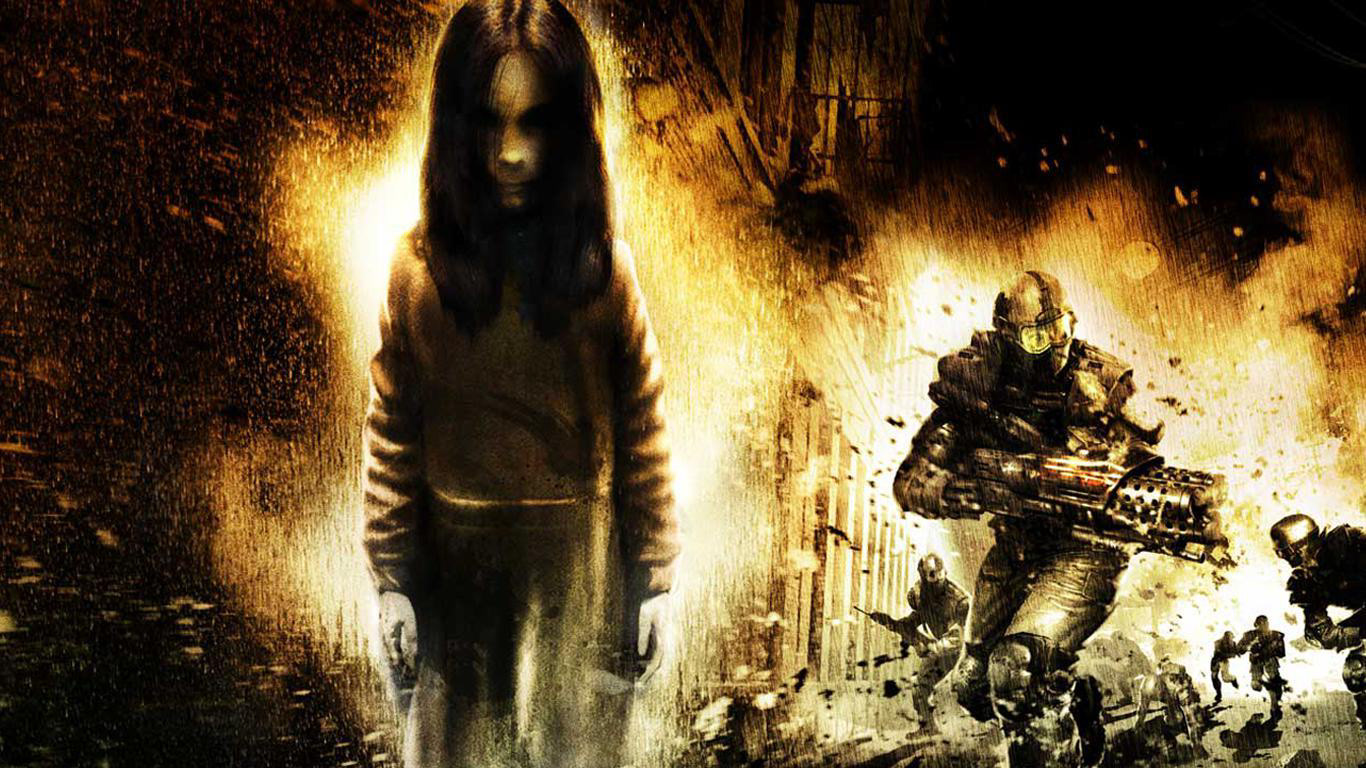
F.E.A.R. is often remembered as a horror shooter, but that label misses the point. The game isn’t interested in making you feel helpless. It wants you alert, controlled, and intentional. Fear exists here, but it’s never meant to paralyze you; it’s meant to sharpen you.
This assessment breaks down where F.E.A.R. still works, where it betrays its own philosophy, and why (despite friction and uneven pacing) it remains a focused, psychologically coherent experience nearly two decades later.
🌄 VISUALS & WORLD DESIGN
Visually, F.E.A.R. immediately evokes comparisons to Half-Life 2. Flat lighting. Muted textures. Industrial interiors. Long corridors and office spaces that feel deliberately unremarkable. And honestly, that doesn’t bother me.
Yes, the game looks dated. Character models are stiff. Environmental detail is limited by modern standards. But the visual language is consistent. Everything belongs to the same world. Nothing feels ornamental, exaggerated, or out of place. There’s a quiet confidence in that restraint.
F.E.A.R. understands its limits and leans into atmosphere instead of spectacle. These environments aren’t designed to impress; they’re designed to feel institutional. Cold. Functional. Interchangeable. Like places built to serve a system rather than the people inside it.
Offices, labs, stairwells, warehouses: they all blur together by design. These are not heroic spaces. They’re procedural ones.
That cohesion does a lot of work for immersion. You’re not navigating landmarks; you’re moving through infrastructure. Buildings feel abandoned not because they’re ruined, but because whatever human purpose once existed here has already been stripped away.
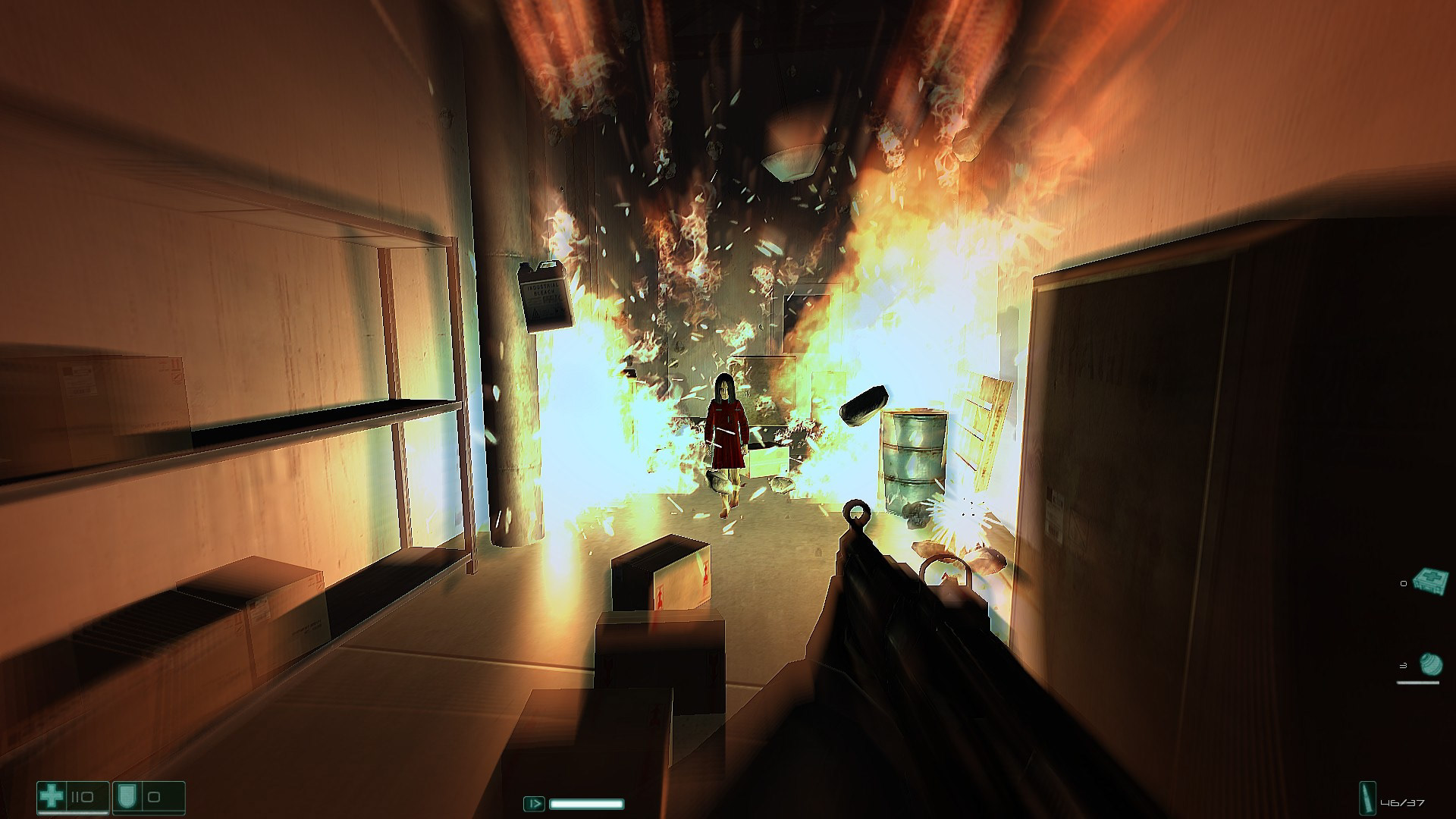
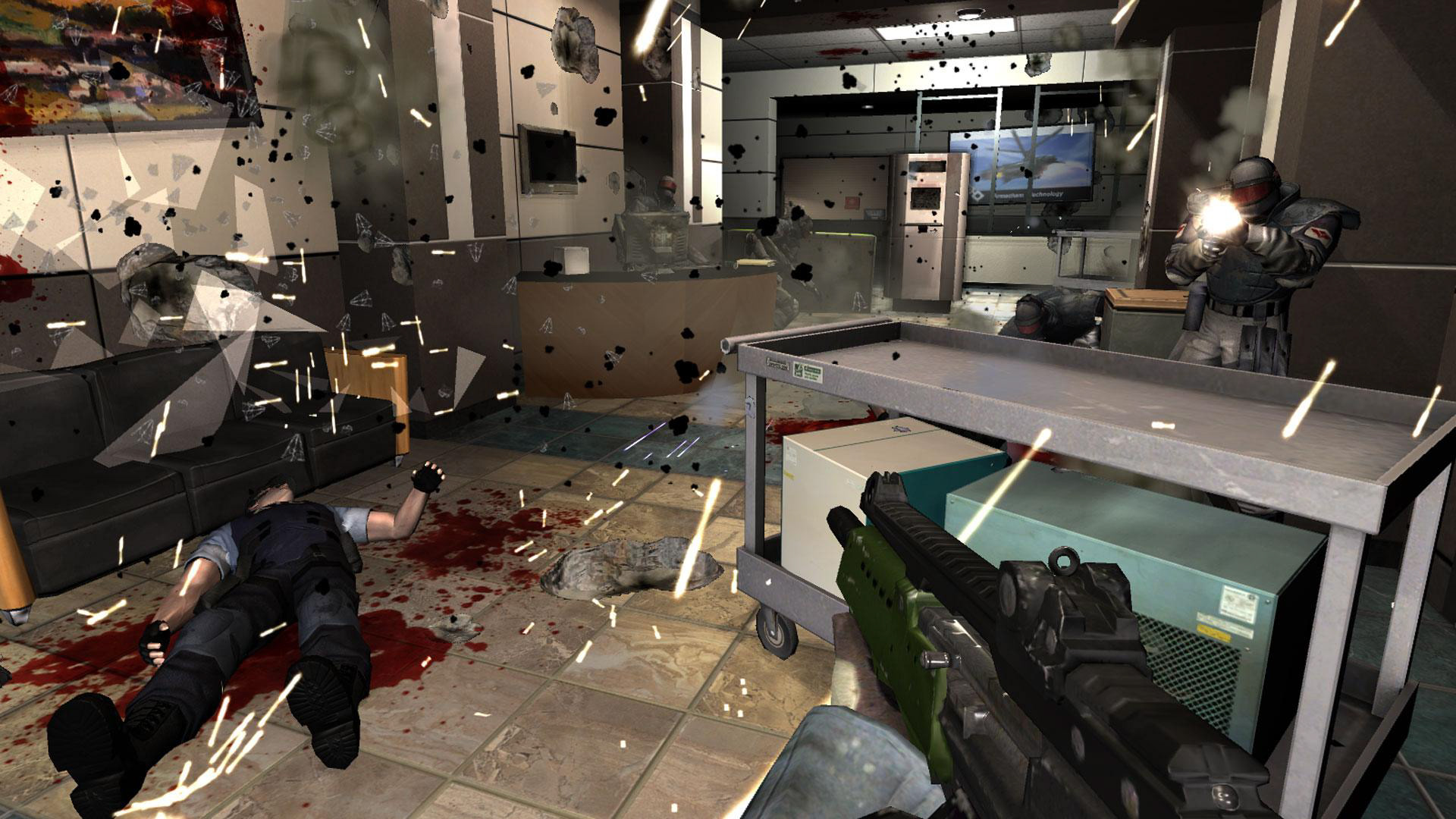
What stands out most, especially for a 2005 release, is how reactive the world feels during combat:
Shotguns tear enemies apart
Walls chip and crumble
Glass shatters convincingly
Explosions carry physical weight
Walls chip and crumble
Glass shatters convincingly
Explosions carry physical weight
It’s not a full physics sandbox, but it’s responsive enough to ground combat in physical reality. Violence has feedback. Actions leave marks.
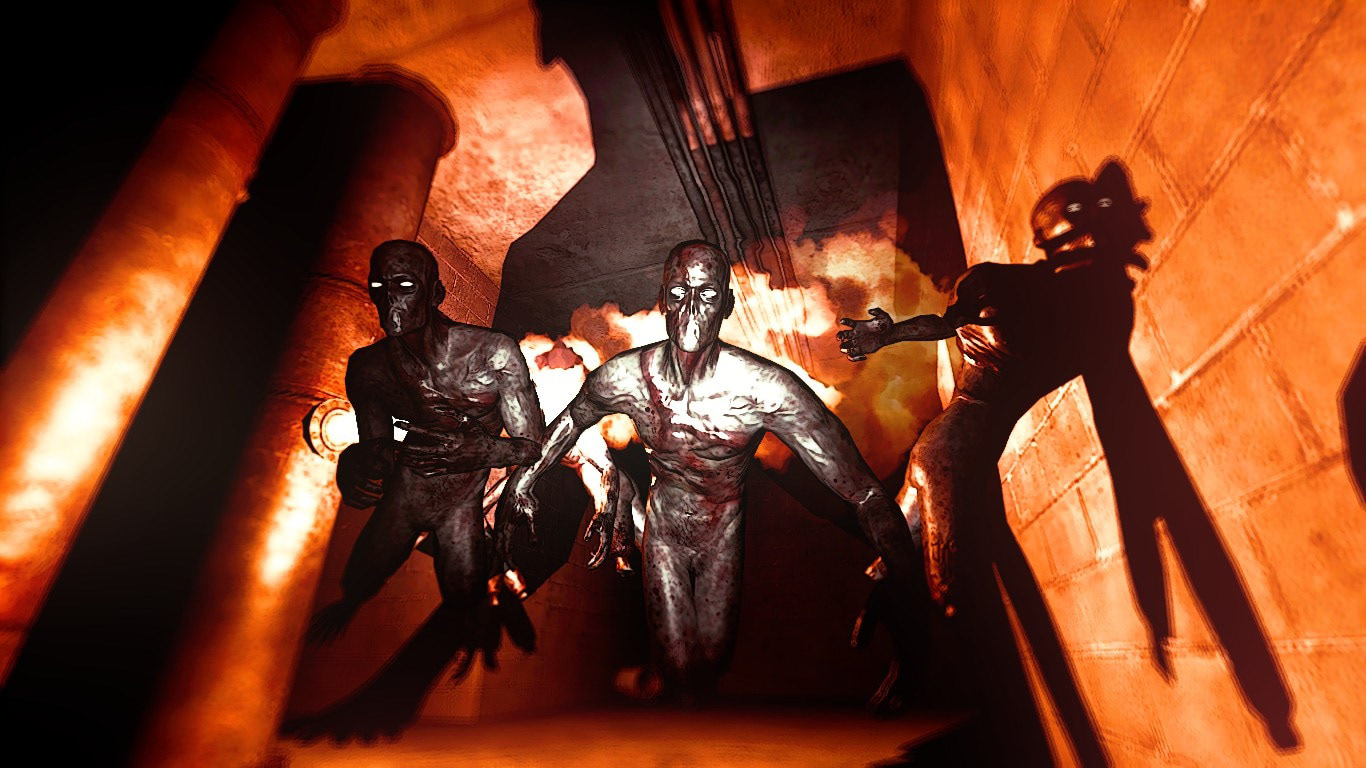
Enemy design follows the same philosophy. You’re mostly facing:
Standard soldiers
Heavily armored units
Police forces
Mechs and a handful of specialized threats
Heavily armored units
Police forces
Mechs and a handful of specialized threats
There isn’t much visual variety, but it doesn’t hurt the experience. F.E.A.R. doesn’t rely on novelty; it relies on encounter design and AI behavior. The lack of visual flair reinforces the idea that these are tools of a system, not personalities.
Weapon design strikes a careful balance between realism and stylization. Standard firearms sit alongside more exaggerated sci-fi weapons like the energy sniper and explosive cannon. None of it feels cartoonish. The arsenal has identity without breaking tone.
Where the game struggles visually is environmental differentiation. Many interiors look extremely similar. Offices blend into corridors, stairwells repeat, and spatial memory becomes unreliable. On a first playthrough, this can create genuine disorientation. You’re not lost because the level is complex; you’re lost because everything shares the same visual language.
Conceptually, that makes sense. Anyone who’s worked in large office buildings knows how easily spaces blur together. That realism aligns with the game’s themes of control and containment.
But in practice, it sometimes crosses from atmospheric into disruptive.
I’m not asking for modern guidance systems or bright visual markers. Slightly stronger environmental landmarks (unique silhouettes, clearer spatial anchors) would’ve preserved flow without compromising immersion.
To the game’s credit, once you understand F.E.A.R.’s directional logic (push forward, avoid deep backtracking) that friction fades. On a second playthrough, the environments feel more intentional than confusing. The world becomes legible once you stop fighting its structure.
Overall, F.E.A.R.’s visuals are a product of their time, but they’re honest, cohesive, and purposeful. It doesn’t age poorly. It simply ages visibly.
🔊 SOUND DESIGN
Sound design in F.E.A.R. is restrained, functional, and deliberate. This isn’t a game driven by constant music or overt audio cues. Instead, it relies on ambient sound and controlled silence to shape tension.
Most of the time, there’s no score guiding emotion. You’re left with:
Low industrial hums
Distant machinery
Environmental noise
Silence, used intentionally
Distant machinery
Environmental noise
Silence, used intentionally
That absence is the point. F.E.A.R. isn’t trying to overwhelm you emotionally; it’s trying to keep you alert. Focused. Slightly on edge. The lack of music forces you to read the space rather than react to it.
When music does appear, it’s minimal and purposeful. A few tracks (often built around electronic music) surface during more intense combat moments, but they never dominate the soundscape. The game understands that atmosphere here is about restraint, not escalation.
Weapon audio is where the sound design really asserts itself.
Every firearm has a sharp, aggressive identity:
The shotgun hits with brutal force
Automatic weapons have a clean, mechanical bite
Explosives carry real physical weight
Automatic weapons have a clean, mechanical bite
Explosives carry real physical weight
The standout is the energy sniper rifle. Its high-pitched discharge feels precise and dangerous in a way that’s instantly memorable. It doesn’t just signal power; it communicates intent.
Enemy voice callouts are another critical layer. Soldiers communicate dynamically during combat:
Calling out flanks
Reacting to fallen allies
Coordinating movement
Reacting to fallen allies
Coordinating movement
This does more than sell intelligent AI. It reinforces the player’s position in the encounter. Enemies vocalize stress, confusion, and loss of control. As the fight turns against them, you hear it happening in real time.
Psychologically, this flips the usual power dynamic. You’re not the one being hunted. You’re listening to a system unravel.
Voice acting overall is solid and restrained. Performances aren’t theatrical, but they don’t need to be. Dialogue is clear, functional, and properly mixed for its era. Some lines sound slightly compressed, but information is never lost.
The decision to keep the player character silent works in the game’s favor. It keeps focus outward (on the environment, the enemies, and the unfolding situation) rather than inward on forced characterization.
Exposition is delivered efficiently through:
Radio chatter
Laptop logs
Brief dialogue exchanges
Laptop logs
Brief dialogue exchanges
The game never pauses to lecture. Information arrives while you’re moving, reinforcing forward momentum.
Overall, F.E.A.R.’s sound design doesn’t demand attention, and that’s precisely why it works. It supports immersion, reinforces control, and lets combat speak for itself.
⚔️ GAMEPLAY
Gameplay is where F.E.A.R. reveals its true identity.
At its core, this is a tactical shooter built entirely around time dilation. Without it, the game would feel punishing and inconsistent. With it, combat becomes fluid, aggressive, and deeply satisfying.
The reflex system isn’t a gimmick; it’s the backbone of the entire design.
Once you understand how to use it properly, combat clicks into place:
Slow time
Read the space
Chain precise shots
Close distance deliberately
Control the encounter instead of reacting to it
Read the space
Chain precise shots
Close distance deliberately
Control the encounter instead of reacting to it
When everything aligns, F.E.A.R. feels exceptional. Few shooters deliver this level of visceral feedback. Enemies react violently, bodies collapse convincingly, and firefights feel kinetic and physical.
Weapon variety is solid despite the lack of upgrades. You’re limited to carrying three weapons at a time, which forces meaningful decisions:
Handguns
Shotguns
SMGs
Assault rifles
Semi-snipers
Energy sniper
Rocket launcher
Explosive cannon (late game)
Shotguns
SMGs
Assault rifles
Semi-snipers
Energy sniper
Rocket launcher
Explosive cannon (late game)
Each weapon has a clear role, and the game naturally pushes you to rotate loadouts based on encounter design and ammunition flow.
Combat rewards a specific balance:
Aggression
Spatial awareness
Tactical restraint
Spatial awareness
Tactical restraint
Pushing forward is encouraged, but doing so without awareness is punished. The game doesn’t want reckless speed. It wants intentional momentum.
Enemy AI supports this philosophy. Soldiers reposition, flank, and communicate. By modern standards, the behavior isn’t revolutionary, but it remains effective because it’s designed to interact directly with the reflex system. Enemies feel threatening until you slow the world down and dismantle them.
Become a member Environmental interaction reinforces that control:
Explosive objects
Destructible surfaces
Breakable glass and debris
Destructible surfaces
Breakable glass and debris
The world responds to violence in a way that makes combat feel grounded and consequential.
The Chapter 8 Problem
This is where F.E.A.R. breaks its own rules.
Chapter 8 introduces encounter design that contradicts the game’s established philosophy. Instead of reinforcing control and spatial awareness, it leans heavily on:
Severe ammo scarcity
Rocket launcher enemies capable of near-instant kills
Choke points that demand rushed execution rather than tactical positioning
Rocket launcher enemies capable of near-instant kills
Choke points that demand rushed execution rather than tactical positioning
The optimal solution becomes clear, and uncomfortable:
Abuse medkits
Trigger reflex immediately
Rush past threats
Bypass combat entirely
Trigger reflex immediately
Rush past threats
Bypass combat entirely
That approach works mechanically, but it undermines everything the game has taught you up to that point. This isn’t meaningful escalation. It’s a disruption of flow.
What reinforces this critique is structural context:
Chapters 9, 10, and 11 do not escalate difficulty
Chapter 12 functions as an epilogue
Chapter 12 functions as an epilogue
Chapter 8 isn’t a narrative or mechanical climax; it’s an anomaly. Thankfully, the game recovers quickly and returns to its established rhythm.
Controls and Feel
Controls and Feel Controls reflect an earlier era. Button mapping differs from modern standards, and initial muscle memory resistance is unavoidable. But once internalized, the game feels deliberate and responsive.
Aiming is handled without traditional iron sights, closer to shooters like Halo. Within F.E.A.R.’s design framework, this works. It reinforces rapid decision-making and complements the reflex mechanic rather than hindering it.
Overall, gameplay remains F.E.A.R.’s strongest pillar. It’s intense, aggressive, and mechanically coherent: flawed in isolated moments, but never confused about what it wants to be.
📖 STORY & CHARACTERS
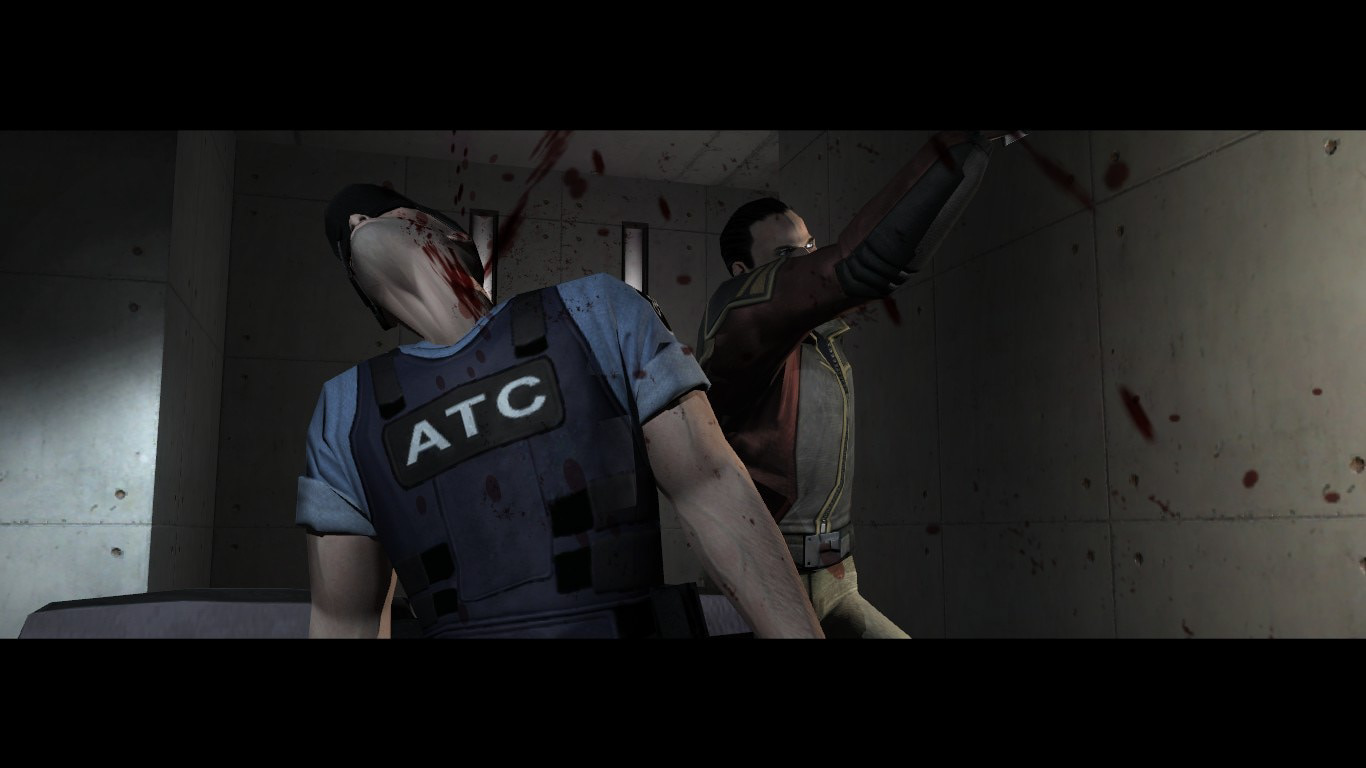
The story in F.E.A.R. functions less as a traditional narrative and more as a psychological framework. It doesn’t rely on dramatic cutscenes or constant exposition. Instead, it drip-feeds information, allowing implication and environment to do most of the work.
You begin as the “new guy,” dropped into an operation already spiraling out of control. Despite your rookie status, your competence is immediately acknowledged. Other characters recognize that you’re not just capable; you’re exceptional. That contrast matters. You’re not present by chance. You’re part of the system’s last contingency.
As the game progresses, the focus shifts toward uncovering the truth behind Project Origin: not as a twist, but as an inevitability.
Information is delivered organically through:
Laptop logs
Radio chatter
Environmental context
Radio chatter
Environmental context
Nothing is overexplained. You’re expected to piece things together while continuing to move forward. That restraint mirrors the organization itself: a system that withholds truth while demanding obedience.
At the center of everything is Alma.
She is not framed as a conventional horror antagonist. She doesn’t stalk you constantly, and she rarely engages directly. Instead, she exists as an unrelenting presence: watching, intruding, asserting herself into spaces where she was never meant to exist.
From a psychological perspective, Alma represents the consequence of absolute repression. A child isolated, experimented on, stripped of autonomy, and denied any form of normal development. She isn’t motivated by revenge in a traditional sense. She’s the manifestation of something that was never allowed to integrate.
She doesn’t need to destroy the world intentionally. Her existence destabilizes it naturally.
Your brother serves as a distorted counterpoint. Where Alma represents suppressed emotion and trauma made autonomous, your brother represents will without empathy. He is controlled, efficient, and completely dissociated from consequence. If Alma is chaos born from repression, he is order stripped of humanity.
Both are products of Project Origin.
The difference is integration.
The difference is integration.
Your character (silent and observational) exists between these extremes. You are the successful outcome. The version that functions. The one who can operate within violence without losing coherence.
The supporting cast reinforces this framework.
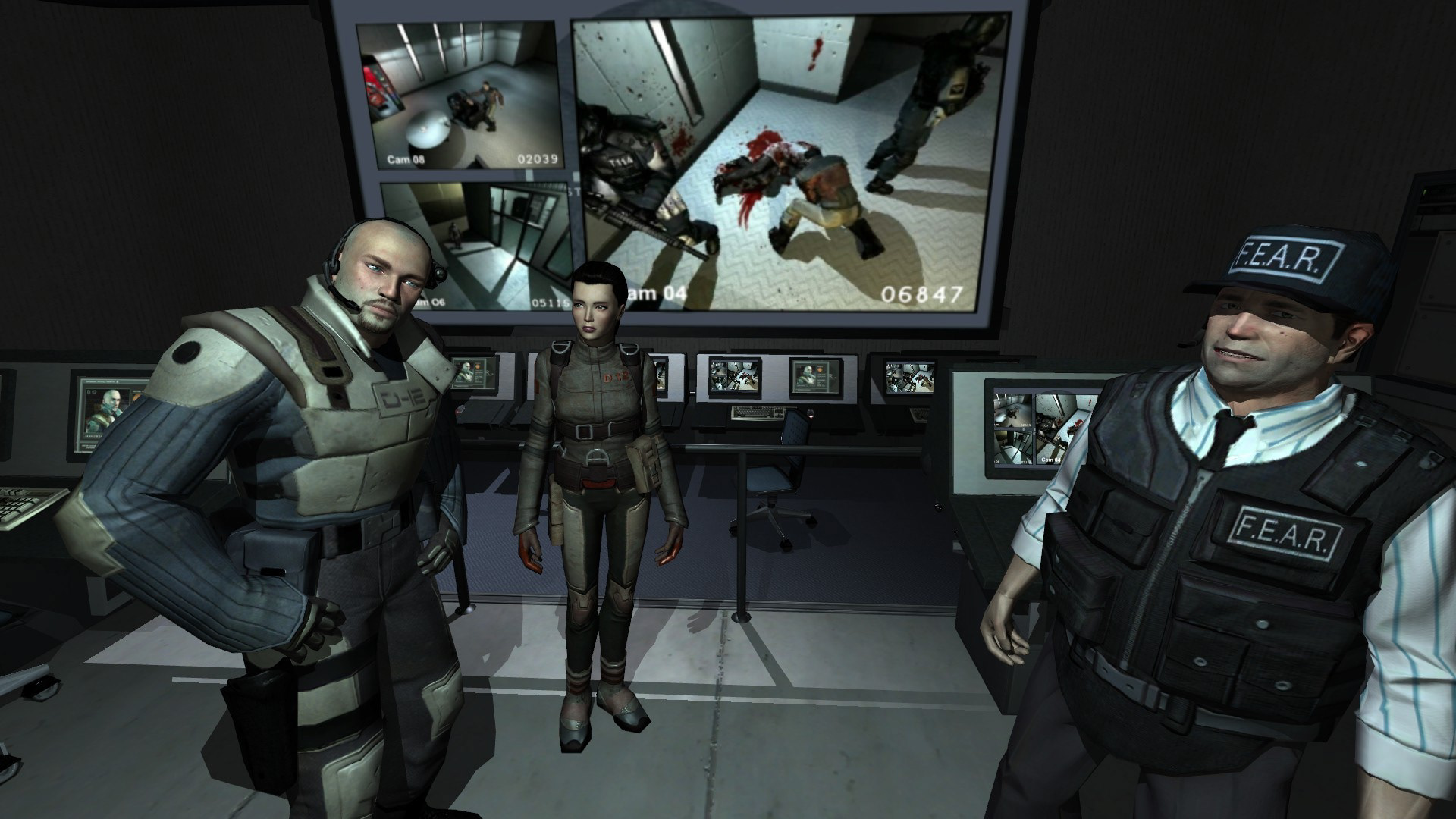
The blonde scientist searching for her father is driven by obsession rather than logic. Her decision-making isn’t heroic or rational; it’s desperate. She prioritizes personal closure over safety, procedure, and survival. Psychologically, she mirrors the same flaw that created Alma: the belief that emotional needs can be contained or delayed without consequence. Her fate feels tragic because it’s predictable.
The overweight technician is the inverse. He is self-preserving, evasive, and opportunistic. He understands the system is collapsing and responds by prioritizing himself at every turn. He isn’t brave or admirable, but he’s honest in a way others aren’t. His selfishness is survival stripped of illusion.
Most squad members remain emotionally guarded and mission-focused. That restraint feels intentional. This is a black-ops operation built on compartmentalization. Personal attachment is a liability. The game doesn’t want you bonding deeply; it wants you observing behavior under stress.
The climax, particularly the nuclear detonation, lands because it feels like consequence rather than spectacle. It doesn’t resolve Alma. It doesn’t undo the damage. It simply contains the situation, temporarily.
And that’s the most unsettling truth F.E.A.R. leaves you with.
Nothing was fixed.
Only managed.
Nothing was fixed.
Only managed.
💭 PERSONAL TAKE
Playing F.E.A.R. twice within a short span resulted in two very different experiences.
On my first playthrough, I hadn’t fully internalized the game’s design language. I backtracked unnecessarily, underused time dilation, and resisted the control scheme instead of adapting to it. The result was friction that felt external, creating unnecessary frustration.
The second playthrough was different. Once everything clicked (the controls, the pacing, the reflex system) the game revealed its intent. Combat became deliberate instead of chaotic. Navigation became clearer once I trusted the forward momentum the game expects from you.
F.E.A.R. thrives when played in focused sessions rather than extended marathons. It’s intense, aggressive, and mentally demanding. Stepping away and returning sharpens the experience instead of breaking immersion.
Combat remains the clear highlight. There’s a specific satisfaction that comes from:
Slowing time at the right moment
Lining up precise shots
Switching weapons instinctively
Controlling encounters instead of reacting to them
Lining up precise shots
Switching weapons instinctively
Controlling encounters instead of reacting to them
You don’t feel hunted.
You feel composed.
You feel composed.
That power fantasy is intentional. Your character isn’t a fragile survivor scraping by; you’re a hyper-capable operator moving through a system that’s failing around you. The game supports this identity mechanically and narratively.
That said, friction still exists. Navigation can disrupt momentum, especially on a first playthrough. Similar-looking environments blur together, occasionally pulling focus away from combat. Exploration is usually rewarded (ammo, medkits, armor upgrades) but it sometimes feels like a speed bump rather than a complement to pacing.
Chapter 8 remains the most noticeable misstep. Its reliance on forced aggression, heavy enemies, and limited tools contradicts the game’s core philosophy. It doesn’t break the experience, but it stands out precisely because everything else is so consistent.
Despite these issues, my overall takeaway is positive.
F.E.A.R. isn’t a game I’ll obsess over long after finishing it, but the time spent with it was focused, engaging, and mechanically satisfying. It knows what it wants to be, and most of the time, it executes that vision with confidence
🧠 CLOSING THOUGHTS
F.E.A.R. is a focused, deliberate shooter built around a clear identity. It doesn’t chase scale, spectacle, or constant escalation. Instead, it commits to atmosphere, control, and mechanical expression through time dilation and intelligent enemy behavior.
At its best, the game delivers combat that still feels distinctive nearly two decades later. Slowing time, controlling space, and dismantling encounters with precision creates a feedback loop that’s aggressive, deliberate, and satisfying. When the game respects its own rules, it shines.
Visually, F.E.A.R. shows its age, but not in a way that undermines its intent. Flat lighting, industrial interiors, and muted palettes reinforce isolation and institutional coldness. The world feels cohesive, even when repetition occasionally disrupts navigation.
Sound design supports that atmosphere without demanding attention. Weapons are punchy. Enemy callouts reinforce intelligence and urgency. Silence is used with purpose. Nothing feels overproduced.
Narratively, F.E.A.R. succeeds through implication rather than exposition. The mystery surrounding Project Origin, Alma, and your role unfolds naturally, trusting the player to connect the dots. It’s not emotionally dense, but it’s psychologically consistent.
Where the game falters is in moments where it betrays its own philosophy, most notably in Chapter 8. Forced aggression, ammo scarcity, and abrupt difficulty spikes interrupt flow and undermine the clarity the game otherwise maintains. These moments don’t define the experience, but they stand out precisely because the rest of the game is so controlled.
Still, F.E.A.R. recovers quickly and finishes with confidence.
This isn’t a game that demands the highest difficulty to be appreciated. Its value comes from flow, not punishment. From clarity, not endurance. When played on its own terms, F.E.A.R. remains a sharp, memorable shooter with a distinct personality.
It may not be timeless.
But it is honest, focused, and confident in what it offers.
And that’s why it still deserves to be remembered.
But it is honest, focused, and confident in what it offers.
And that’s why it still deserves to be remembered.